
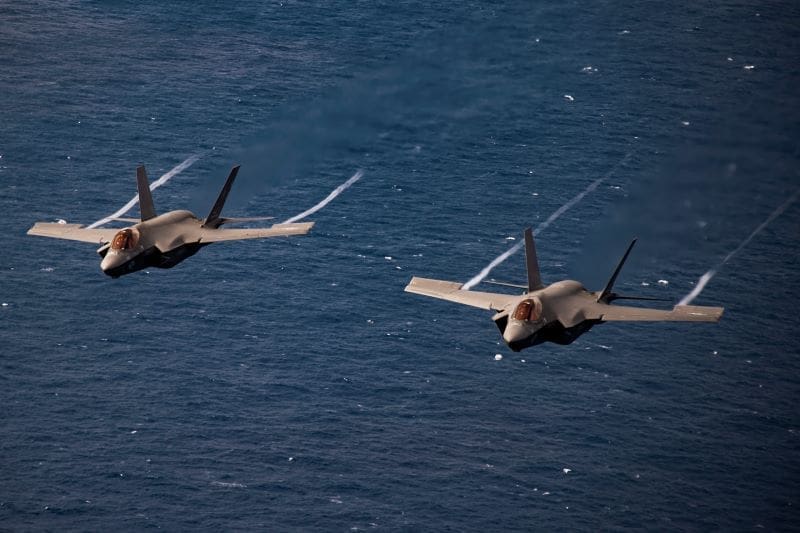
Combined Environments MIL-STD-810 Method 520

Combined Environments MIL-STD-810 Method 520
Photo By: Air Force Tech. Sgt. Matthew Plew

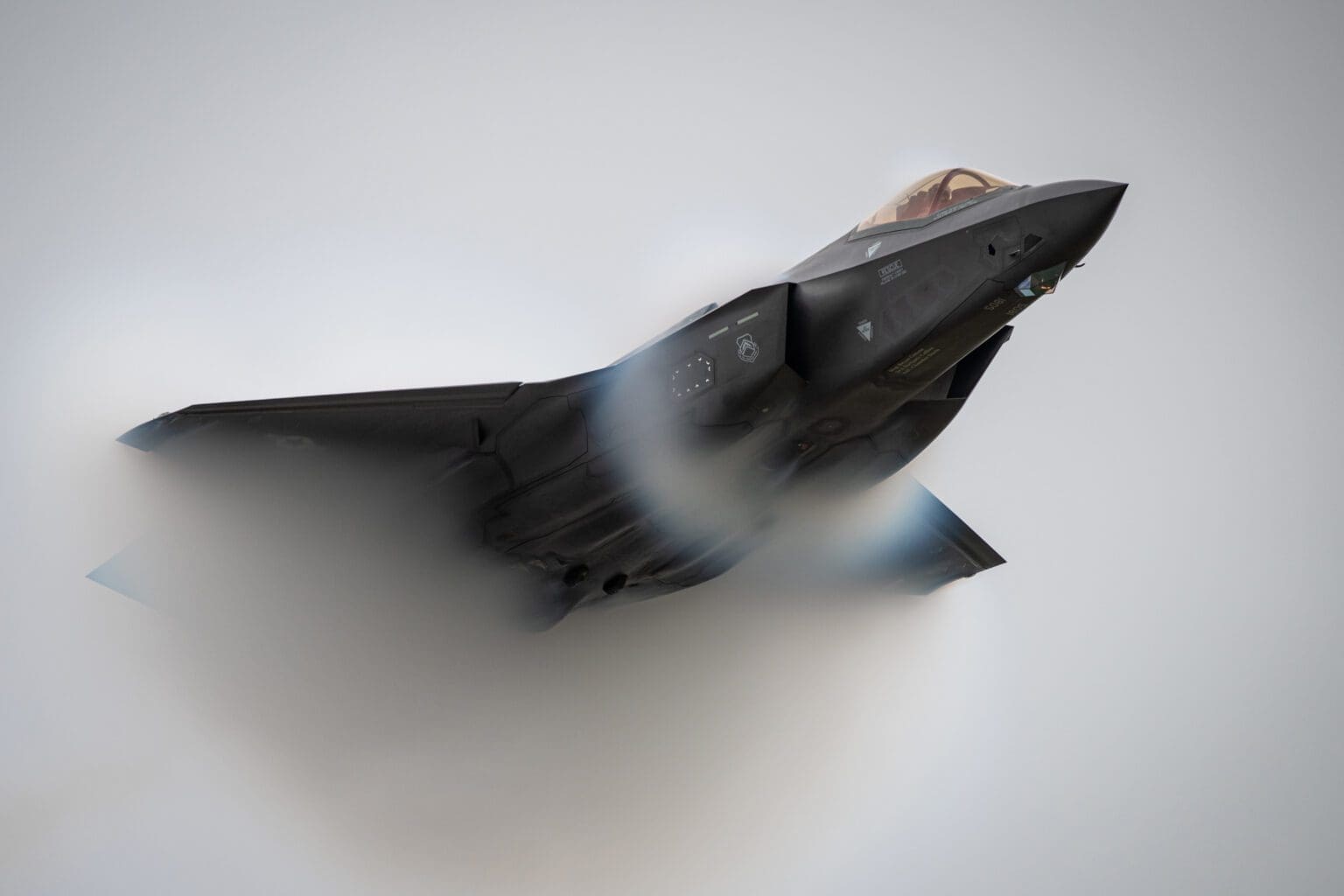
Combined Environments MIL-STD-810 Method 520 is used to evaluate the synergistic effects of multiple environmental stressors on equipment intended airborne applications.  The use of synergetic effects can uncover failures effecting the performance, or integrity of equipment under test that individual stresses would not reveal.  

Environmental factors that are applicable to this method are vibration, temperature, humidity, and altitude.  Fluctuations in input electrical power were added to this list in revision H of the military standard.  These fluctuations include variations in voltage and frequency in addition to expected power transients.  Additionally, revision H changed the title of this method from Temperature, Humidity, Vibration, and Altitude to Combined Environments.

Special Considerations When Applying Method 520

The United States Department of Defense originally used this multi-stress analysis approach in the development of the F-15 Eagle.  While its primary application is for rotor and fixed wing platforms, it is also applicable for equipment destined for other platforms.  Regardless of platform type, test tailoring is essential in creating test procedures.  This tailoring should be based on the test item’s Life Cycle Environmental Profile (LCEP).

Performance of this method does not remove requirements for separate testing of each environmental stress included in this method.  This method is not intended to include short duration, infrequent dynamic effects such as Gunfire Shock.  Additionally, this test is primarily intended for operational testing, with the Unit Under Test (UUT) being powered and functional.

Procedures for Combined Environments

There are three procedures available for Method 520, Combined Environments.  

  • Procedure I – Engineering Development is typically used early in the development stage or on modifications of a product to reveal design defects.  Once a defect is identified, further testing may then be conducted to determine root causes.
  • Procedure II – Flight or Mission Support can be used to replicate specific mission scenarios where troubleshooting on a specific combination of effects.  It is particularly useful in cases where troubleshooting issues during actual flight is not practical or safe.
  • Procedure III – Platform Envelope is used to demonstrate compliance to specification requirements where specific combinations of stressors are concerned.

Information of Interest

Method 520 provides information on a number of topics that can be used in other forms of testing.  It contains information about thermal stresses at specific altitudes.  It provides guidance for analysis of stresses caused by low pressures experienced at specific altitudes.  It also provides guidance for evaluating potential stresses from vibration, humidity, and electrical supply fluctuations.  Most importantly, it includes guidance for developing test profiles based on generalized mission profiles.

Detailed Environmental Test Plan Templates

CVG Strategy offers EZ Test Plan Templates for MIL-STD environmental (climatic/dynamic) and EMI/EMC test documentation.  Our Detailed Environmental Test Plans (DETP)s are written as specified in Department of Defense standard MIL-STD-810 Task 405.  They are available for specific applications such as Ground Mobile, Ground Stationary, and Shipboard Controlled, Shipboard Uncontrolled, and Aircraft Military.

These DETPs include appropriate methods, (such as Combined Environment MIL-STD-810 Method 520) addendums for product specific information, test labels for photo identification and data sheets for collection of required data. Profile (LCEP). 

Our Electromagnetic Interference Test Plans are written as specified in MIL-STD-461.  They contain the test methodology, addendums for product specific information, test labels for photo identification and data sheets.  These plans are available for procedures listed in MIL-STD-461 and are also available for MIL-STD-1275, MIL-STD-704, and MIL-STD-1399-300. 

Custom Test Plans are also available for applications not covered in the EZ Test Plan offerings.  These plans can be written for any number of applications and their relevant standards.

MIL-STD-810 Training Classes

CVG Strategy MIL-STD-810 classes will provide you with the ability to develop and conduct an environmental test program.  Our two-day course not only provides you with valuable information about climatic and dynamic test methods but also includes training in the methodology to correctly apply test tailoring relevant to the test item’s expected life cycle. 

This course is available online or onsite.  Ample time is available for questions and comments so that participants are encouraged to keep engaged.  Check here for our online Training Registration Schedule.

Put CVG Strategy’s Experience to Work for You

Companies of all sizes, from start up to established product developers, face challenges in product test and evaluation.  This can particularly be the case when a product is developed for a new market sector or expanding sales internationally.

Properly tested products prevent costly product recalls, product redesign, and product liability.  They maintain customer satisfaction and keep your company’s reputation in good standing.  Contact CVG Strategy to see how our services can assist your engineering team with Combined Environment MIL-STD-810 Method 520 or any other MIL-STD-810 test and evaluation concern.
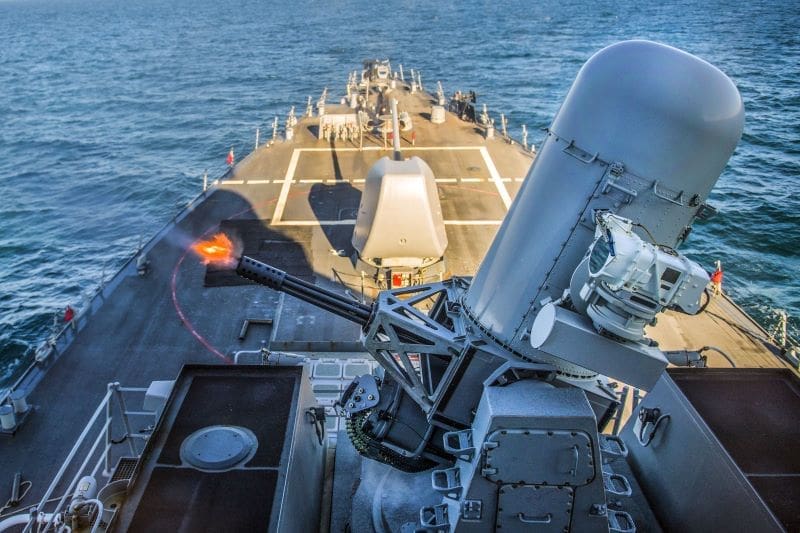

Gunfire Shock MIL-STD-810 Method 519

Gunfire-Shock-MIL-STD-810-Method-519
Photo By: PO2 James Turner

Gunfire Shock MIL-STD-810 Method 519 testing is performed to ensure that equipment can operate and structurally withstand short duration, high-rate shocks from gunfire.  This test method is not intended for single shot gunfire from large Navy or tank guns.  Types of gunfire shock are referred to as gunfire schedules.  These shocks can include a combination of shock transmitted through a structure or an airborne shock generated by gun muzzle blast pressure waves.

Procedures for Gunfire Shock Testing

There are three test procedures available for Gunfire Shock:

  • Procedure I: Measured Materiel Input/Response Time History Under TWR.  This procedure is applicable when measured time trace information is available.  This data would be replicated with Single-Exciter/Single-Axis (SESA), using Time Waveform Replication (TWR).
  • Procedure II: SRS Generated Shock Time History Pulse Sequence Under TWR.  This procedure is used when previously processed Shock Response Spectrum (SRS) is available.  This single shock is then concatenated into a shock pulse series.
  • Procedure III: Stochastically Generated Materiel Input from Preliminary Design Spectrum Under TWR.  This procedure is to be used when no measured data is available.  This procedure, while of value for engineering analysis, is not suitable for materiel qualification.

Testing Considerations

In most cases, testing can be performed at ambient temperature.  However, when the operational environment of Unit Under Test (UUT) as determined in the Life Cycle Environmental Profile (LCEP) indicates operation at extreme temperatures, testing at high or low temperatures may be preferable.

Testing is normally performed on all axes with regards to structure born vibrations.  Specific testing on appropriate axis may be performed to assess the effects of muzzle pressure pulses.  The number of pulses used in testing should be based on an LCEP analysis as to frequency of expected exposures.

Detailed Environmental Test Plan Templates

CVG Strategy offers EZ Test Plan Templates for MIL-STD environmental (climatic/dynamic) and EMI/EMC test documentation.  Our Detailed Environmental Test Plans (DETP)s are written as specified in Department of Defense standard MIL-STD-810 Task 405.  They are available for specific applications such as Ground Mobile, Ground Stationary, and Shipboard Controlled, Shipboard Uncontrolled, and Aircraft Military.

These DETPs include appropriate methods, (such as Gunfire Shock MIL-STD-810 Method 519) addendums for product specific information, test labels for photo identification and data sheets for collection of required data. Profile (LCEP). 

Our Electromagnetic Interference Test Plans are written as specified in MIL-STD-461.  They contain the test methodology, addendums for product specific information, test labels for photo identification and data sheets.  These plans are available for procedures listed in MIL-STD-461 and are also available for MIL-STD-1275, MIL-STD-704, and MIL-STD-1399-300. 

Custom Test Plans are also available for applications not covered in the EZ Test Plan offerings.  These plans can be written for any number of applications and their relevant standards.

MIL-STD-810 Training Classes

CVG Strategy MIL-STD-810 classes will provide you with the ability to develop and conduct an environmental test program.  Our two-day course not only provides you with valuable information about climatic and dynamic test methods but also includes training in the methodology to correctly apply test tailoring relevant to the test item’s expected life cycle. 

This course is available online or onsite.  Ample time is available for questions and comments so that participants are encouraged to keep engaged.  Check here for our online Training Registration Schedule.

Put CVG Strategy’s Experience to Work for You

Companies of all sizes, from start up to established product developers, face challenges in product test and evaluation.  This can particularly be the case when a product is developed for a new market sector or expanding sales internationally.

Properly tested products prevent costly product recalls, product redesign, and product liability.  They maintain customer satisfaction and keep your company’s reputation in good standing.  Contact CVG Strategy to see how our services can assist your engineering team with Gunfire Shock MIL-STD-810 Method 519 or any other MIL-STD-810 test and evaluation concern.

Counterfeit Parts and Quality Management Systems

counterfeit parts
counterfeit parts
Photo by Pixabay:

Counterfeit Parts and Quality Management Systems (QMS)

AS9100 and associated standards provide a Quality Management System (QMS) approach to the problem of counterfeit parts for the aviation, space, and defense industries.  These counterfeit electronics parts avoidance standards were created in response to requirements of the aerospace supply chain where counterfeit parts pose significant performance and reliability risks. 

Counterfeit Parts Pose a Threat to All Industries

The best product design is only as good as its implementation.  Counterfeit parts can cause failures of mission critical products causing injury and even death.  While much has been accomplished by distributors of components to control the problem, the danger is still very present and costs industries billions of dollars each year. 

The U.S. Department of Defense (DoD) also faces this critical issue.  A Senate Armed Services Committee (SASC) report in 2012 described 1,800 instances of suspected counterfeit parts between 2009 and 2011.  This report resulted in the passage of the National Defense Authorization Act (NDAA) to address DOD supply chain integrity.

New Technologies Provide Solutions

New technologies are enhancing the detection and avoidance of suspect parts.  Blockchain for example is being employed to provide proof of origin for materials and components throughout the supply chain life cycle. 

This highly secure encryption is utilized in smart tags.  The encoded information can provide a higher degree of confidence in an item’s authenticity.  Tagging mechanisms include RFID and 2D matrix codes.

Applicable Quality Management Industry Standards

AS9100D Quality Management Systems – Requirements for Aviation, Space, and Defense Organizations

AS9100D is a Quality Management System (QMS) based on the structure and content of ISO 9001:2015 with the addition of requirements specific to the aerospace, and defense industries. It also includes provisions for customer and regulatory requirements. The standard is applicable to businesses of all sizes who need to consistently provide products and services to specified requirements. Additionally, it provides processes for systematic improvement of the management system and its ability to ensure customer satisfaction.

AS9100 requirements include preventing the incursion of fraudulent counterfeit electronic parts into manufacturing cycles.  It requires that specific actions be undertaken.  These actions include training, establishment of a parts monitoring program, use of authorized and approved sources, traceability requirements, verification methodologies, monitoring of counterfeit part reports, and reporting and quarantining of detected or suspected counterfeits.

AS5553 – Counterfeit Electronics Parts; Avoidance, Detection, Mitigation and Disposition

AS5553 – Counterfeit Electronics Parts; Avoidance, Detection, Mitigation and Disposition was created in 2009.  The newest revision, SAE AS5553D, was released in April 2022.  It provides methods, requirements, and practices for parts management, supplier management, procurement, inspection, test/evaluation, and response strategies for designers and manufacturers of electromechanical parts (EEE). 

 These requirements are intended to be integrated throughout the supply chain.  The standard calls for risk-based assessments to establish priorities for mitigation of counterfeit EEE parts.  These assessments should consider vulnerabilities to crucial components, levels of desired performance, and necessary reliability of the product.

AS6081 Counterfeit Electrical, Electronic, and Electromechanical (EEE) Parts: Avoidance, Detection, Mitigation, and Disposition – Independent Distribution

This standard establishes practices for distributors and brokers of EEE parts.  It requires that suppliers establish and implement quality and supply chain management systems to detect, reduce, and remove counterfeit parts.  It includes methodologies for inspecting electronic components such as X-ray, XRF, and visual inspection.

Counterfeit Part QMS Solutions for Commercial OEMs

For OEMs outside of the purview of these standards there is an answer.  Because ISO 9001:2015 provides flexibility in implementation for the specific requirements of a company, it allows for creation of stricter traceability requirements in the procurement process.   This means a variety of standards can be implemented to the unique requirements of any OEM.

In conclusion the risk of counterfeit parts poses a threat to manufacturers in all sectors.  A well-designed Quality Management System can identify such risks and mitigate counterfeit components from your products.

CVG Strategy Experts

Our Exemplar Global Lead Auditor Consultants can help you with integrating multiple management systems.  CVG Strategy has prepared, trained and implemented management systems for manufacturing companies in many business sectors.

Our quality strategy allows clients new to Quality Management Systems to rapidly implement a tailored system, because everything we do as consultants is processed based.  Our Quality Experts have experience with ISO9001:2015, AS9100D, ISO 13485:2016, ISO 27001:2013 and Association of American Railroads (AAR) M-1003 and can readily deliver compliant procedures and work instructions.

CVG Strategy is a consultancy offering coaching, mentoring, training and program development focused on areas including Business Process ImprovementExport ComplianceCyber Security and Product Test and Evaluation

Continuous Improvement and Organizational Development

Continuous Improvement and Organizational Development

What is Continuous Improvement?

Continuous Improvement and Organizational Development are valuable tools in a Quality Management System (QMS).  For improvement to occur it is essential that each important process in an organization be identified and analyzed.  Once identified and documented, these processes can be regularly reviewed to access effectiveness by applying improvement based on metrics. 

It is important to realize that everything that happens in a business is a process and should be evaluated for inclusion into a QMS.  This is because there are no activities that can not be made more effective.  The benefits of this effectiveness can include increased product quality, enhanced customer satisfaction, reduction of costs, and employee satisfaction.

Types of Continuous Improvement

Basically, there are two types of continuous improvement, incremental and breakthrough.  Big steps can be more costly and involve a greater risk.  Therefore, they are often reserved for cases where radical change is required.  Incremental improvement is taken in small steps and can be easily assessed for effectiveness, thereby allowing for more immediate adjustment of changes.  

Establishing Paths for Feedback

Organizational feedback is very similar to feedback in mechanical systems.  The famous Scottish inventor James Watt pioneered early feedback mechanisms in the 1700’s.  One of his most important inventions was the centrifugal governor. 

This mechanism automatically regulated the speed of a steam engine by supplying continuous feedback to a controller.  This mechanism paved the way for industrial automation by removing the need for human intervention in a continuous process.

In a business setting, every stakeholder in a process is a source of feedback.  For effective use of the feedback all pertinent information must be assessed.  It must then be filtered in such a way as to remove statistical noise and then intelligently applied to inputs.  When applied, outputs can (results) be monitored as feedback to supply a control system into the process to provide continuous improvement.

Statue of James Watt, engineer and inventor, 1736 – 1819

Using Metrics as Feedback

Businesses today exist in a metrics rich environment.  A wealth of data is available for sales, costs, defective product, customer satisfaction, and employee process suggestions.  Looking into all data available in a process on a regular basis can provide more granular and intelligent findings.  These findings can be used to identify trends and point out potential issues before they become critical. 

This is important because variances in business performance can occur for any number of reasons.  Understanding how all processes are affected by change can provide dynamic responses for continuous improvement and provide a smoother overall performance.

A methodology for defining objectives relative to a quality management system is SMART objectives.  These goals are parametric and as such provide tractability and structure to elements that might otherwise be dealt with subjectively.  The elements of the SMART approach are:

  • S – Specific
  • M – Measurable
  • A – Achievable
  • R – Relevant
  • T – Time Based

Cashing in on Opportunities

When establishing objectives, every challenge is an opportunity to achieve excellence.  Organizations that strive for continuous improvement will perform more efficiently and remain competitive.  This improvement can be made more viable and measurable if objectives are clearly researched and defined.  

To adequately research causes and effective corrective measures it is important to engage an organization at all levels because front-line workers can often provide a more granular perspective than an organization’s managers and senior leaders.  By affording all team members the opportunity to provide feedback, an organization can nurture a culture of continuous improvement that will provide results. 

After initial analysis, opportunities for improvement can be identified.  Stakeholders, work groups, and team members should be involved to seek ways of implementing those opportunities.

This provides feedback from those most involved in the processes and engenders involvement and empowerment in the process improvement methodology. As a result, each individual feels like they made the process better.  This buy in greatly helps with adoption to process changes which can often present a challenge to businesses.

Types of Quality Management Systems

There are a large number of QMS that have been adapted to the needs of specific business sectors or business requirements.  Most are based on ISO 9001: 2015 which utilizes quality processes to meet customer needs.  Organizations that implement ISO 9001 Quality Management Systems (QMS) for their products and services have experienced improvement through improved customer satisfaction, staff motivation and continual improvement.

Other quality systems include:

AS9100 Quality Management Systems – Requirements for Aviation, Space, and Defense Organizations

AS9100 is a quality management system specifically developed for the aerospace industry.   The standard was created in 1999.  Since then, it has been widely adopted by manufactures and suppliers in the industry.  It was written by the Society of Automotive Engineers and the European Association of Aerospace Industries.  

ISO 13485 2016 Medical Devices

ISO 13485 provides a quality management system for organizations involved with medical devices at any stage of that equipment’s life cycle. It includes those organizations supplying materials, sub-assemblies, and components for those devices as well as those that are involved with design, distribution, installation, calibration, service, and decommissioning of medical devices.

ISO 27001 Information Security Management Systems

ISO 27001 (ISO/IEC 27001) helps organizations treat data security seriously and confidently.  It is implemented through documented systems and processes that are designed to guard against the risk of security breaches or misuse of data while ensuring compliance to legal requirements.  The ISO 27001 2013 (Information and Data Security) standard is used as a basis for an ISMS (Information Security Management Systems).

CVG Strategy Quality Management Expertise

Our Exemplar Global Lead Auditor Consultants can help you develop an effective Quality Management Internal Auditing team to perform first-party audits within your organization.  We can also help you implement a new quality program, provide training, and perform second party audits to ensure that your organization complies with contractual requirements.

Our quality strategy allows clients new to Quality Management Systems to rapidly implement a tailored system, because everything we do as consultants is processed based.  Our Quality Experts have experience with ISO 9001:2015, AS9100D, ISO 13485:2016, ISO IEC 27001:2022 and Association of American Railroads (AAR) M-1003 and can readily deliver compliant procedures and work instructions.

As consultants, our focus is to help you improve your business by identifying continuous Improvement and organizational development opportunities for growth and mapping a realistic road to success. We tailor each process improvement project to meet your specific requirements. We can focus on process mapping, improving existing processes, or help you establish or write new business plans for your company.

CVG Strategy is a consultancy offering coaching, mentoring, training and program development focused on areas including Business Process ImprovementITAR and Export ComplianceCyber Security and Product Test and Evaluation

Antiboycott Reporting and Compliance Changes

Antiboycott Reporting and Compliance
Photo by Kai Pilger

Matthew S. Axelrod, Assistant Secretary for Export Enforcement at the U.S. Department of Commerce, released a memorandum July 26, 2023, announcing changes in antiboycott reporting and compliance requirements.  This announcement follows a series of similar memorandums from the Department of Commerce that have increased the intensity of export enforcement actions.

History of U.S. Antiboycott Regulations

The Arab Boycott was formally declared by the Arab League formerly the League of Arab States) in 1945 as an effort to isolate and weaken Israel.  It called for Arab institutions, organizations, merchants, commission agents, and individuals to refuse to deal in, distribute, or consume Israeli products.  As the boycott evolved in its efforts to isolate Israel, it focused on three targets:

  1. Restriction of trade between Israel and Arab states
  2. Restriction of trade between companies that trade with Israel and Arab states
  3. Boycotting agencies that trade with other companies that trade with Israel

During the mid-1970’s the U.S. adopted laws to counteract the participation of U.S. citizens in other unsanctioned economic boycotts or embargoes. These regulations were adopted to require U.S. firms to refuse to participate in foreign boycotts that the United States does not sanction.  These regulations of the Export Administration Regulations (EAR) apply to all individuals and companies located in the United States and their foreign affiliates.

Reporting Changes

Boycott Request Reporting Forms

The Bureau of Industry and Security (BIS) has changed its reporting form to include identification of actual parties that made a boycott request.  Formerly, U.S. Persons were required to only report the country from which the request originated.  

Placement of Antiboycott Policy of Federal Acquisition Sites

The BIS and the Office of Acquisition Management (OAM) are now posting an antiboycott policy statement on the OAM and SAM websites.  This statement informs federal contractors about antiboycott regulations, encourages awareness of prohibitions, warns businesses against participation in boycotts, and stresses requirement for reporting boycott related requests.

CVG Strategy Export Compliance Expertise

Recent changes in antiboycott reporting and compliance requirements are part of a larger trend in U.S, export control laws to further national security and foreign policy objectives.  This enhanced enforcement of the Export Administration Regulations points out the need for viable export compliance programs.

CVG Strategy, a proven leader in export compliance, can help your organization implement and maintain viable export compliance programs to navigate this increasingly complex business concern.  We can provide expertise in Export Administration Regulations, International Traffic in Arms Regulations (ITAR), Sanctions, Denied Parties Screening, Antiboycott and Canadian Goods Program (CGP).

We also provide assistance in item classification, Technical Assistance Agreements (TAA), and voluntary disclosures.  Our staff can also provide effective training for all levels of an organization to ensure that all personnel are aware and up to date on export compliance issues.

As the BIS considers enforcement policies changes, it is becoming more and more important for companies to develop effective export compliance programs.  These developments are likely to continue to raise the complexity and associated risks for companies involved in the international supply chain. 

Acidic Atmosphere MIL-STD-810 Method 518

Acidic Atmosphere MIL-STD-810 Method 518

Acidic Atmosphere MIL-STD-810 Method 518 is used to evaluate protective coatings and materials resistance to corrosive atmospheres.  It is applicable for equipment that will be stored or operated in acidic atmospheres during its lifecycle.  This would include urban and industrial area environmental conditions or equipment that will be mounted near exhausts.

Considerations for Acidic Atmosphere Testing

Acidic Atmosphere testing is one of several tests in MIL-STD-810 that could degrade finishes and coatings of test items.  This method should not be performed on units that have had or will have testing for Sand and Dust, or method 509 Salt Fog/Corrosive Environments.  Acidic Atmosphere should be conducted after Fungus, or Humidity testing.  

This test method should be conducted at qualified test laboratories.  It should not be performed in a salt fog chamber because sulfur dioxide which is used in this testing may permanently contaminate the chamber for any future salt fog tests.

Test Duration and Severity

Two severity levels are provided in this test procedure.  For cases in which the Life Cycle Environmental Profile (LCEP) indicates infrequent exposure, the test item is to be subjected to 3 separate 2-hour spraying exposures with a 22-hour storage period after each spraying.  For more frequent expected exposures, 4 spraying exposures, each for 2-hours with 7 days storage after each spraying should be performed.

The second, more severe test, is representative of a 10-year natural exposure in a moist environment with industrial pollution.  For environments such as installations near exhaust pipes or ship funnel exhausts the test is representative of shorter natural exposures.

Detailed Environmental Test Plan Templates

CVG Strategy offers EZ Test Plan Templates for MIL-STD environmental (climatic/dynamic) and EMI/EMC test documentation.  Our Detailed Environmental Test Plans (DETP)s are written as specified in Department of Defense standard MIL-STD-810 Task 405.  They are available for specific applications such as Ground Mobile, Ground Stationary, and Shipboard Controlled, Shipboard Uncontrolled, and Aircraft Military.

These DETPs include appropriate methods, (such as Acidic Atmosphere MIL-STD-810 Method 518) addendums for product specific information, test labels for photo identification and data sheets for collection of required data. Profile (LCEP). 

Our Electromagnetic Interference Test Plans are written as specified in MIL-STD-461.  They contain the test methodology, addendums for product specific information, test labels for photo identification and data sheets.  These plans are available for procedures listed in MIL-STD-461 and are also available for MIL-STD-1275, MIL-STD-704, and MIL-STD-1399-300. 

Custom Test Plans are also available for applications not covered in the EZ Test Plan offerings.  These plans can be written for any number of applications and their relevant standards.

MIL-STD-810 Training Classes

CVG Strategy MIL-STD-810 classes will provide you with the ability to develop and conduct an environmental test program.  Our two-day course not only provides you with valuable information about climatic and dynamic test methods but also includes training in the methodology to correctly apply test tailoring relevant to the test item’s expected life cycle. 

This course is available online or onsite.  Ample time is available for questions and comments so that participants are encouraged to keep engaged.  Check here for our online Training Registration Schedule.

Put CVG Strategy’s Experience to Work for You

Companies of all sizes, from start up to established product developers, face challenges in product test and evaluation.  This can particularly be the case when a product is developed for a new market sector or expanding sales internationally.

Properly tested products prevent costly product recalls, product redesign, and product liability.  They maintain customer satisfaction and keep your company’s reputation in good standing.  Contact CVG Strategy to see how our services can assist your engineering team with Acidic Atmosphere MIL-STD-810 Method 518 or any other MIL-STD-810 test and evaluation concern.

Pyroshock MIL-STD-810 Method 517

Pyroshock MIL-STD-810 Method 517

Pyroshock MIL-STD-810 Method 517
Photo By: Army Cpl. Alisha Grezlik

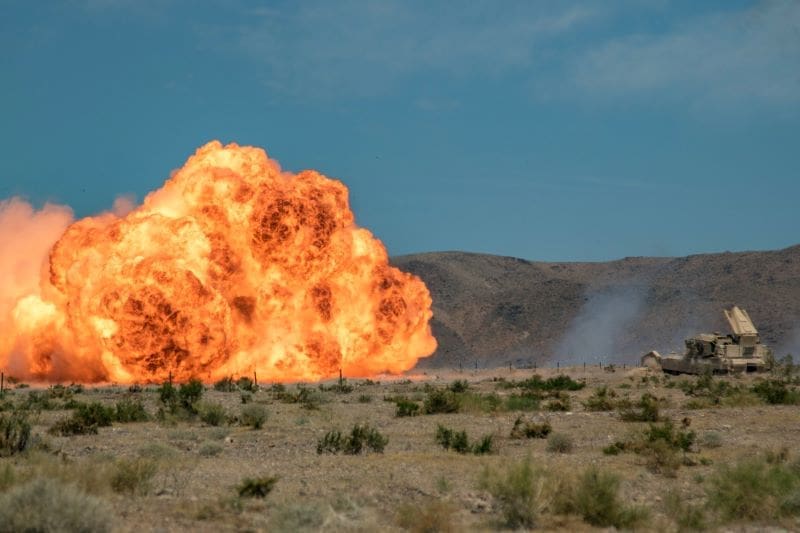
Pyroshock MIL-STD-810 Method 517 is a test to evaluate equipment’s ability to withstand mechanical transients caused by the detonation of devices such as explosive bolts and Flexible Linear Shape Charges (FLSC).  

Characteristics of Pyroshock Events

Pyroshocks can produce excitation in a broad range of frequencies.  These typically range from 100 Hz to 1 MHz with a duration of 50 microseconds to 20 milliseconds.  This is of special concern for electronic equipment as the excitation at high frequencies will be comprised of wavelengths that can induce failures and unexpected behaviors from micro-electronic components.

The effects of pyroshock can include the aforementioned failure of micro-electronic devices.  It can also cause relay chatter, and failures due to cracks and fractures in crystals, epoxies, ceramics, or glass envelopes.  

Pyroshock Zones

Levels of expected exposure to pyroshock events are classified in the test standard into near field, mid field, and far field.  Near-field testing requires testing above 10,000 Hz and amplitudes greater than 10,000 g’s.  Mid-field requires pyroshock tests to include frequencies between 3,000 Hz and 10,000 with amplitudes less than 10,000 g’s.  Far-field testing is limited to frequencies no higher than 3,000 Hz and less than 1,000g’s.

Procedures for Pyroshock

As of MIL-STD-810H change 1, the pyroshock method includes five different procedures:

  • Procedure I – Near-Field with an Actual Configuration requires testing with actual intended platform of the test item and a specified explosive device.
  • Procedure II – Near-field with a Simulated Configuration involves mounting the test item on a steel plate to minimize testing costs.
  • Procedure III – Mid-field with mechanical test device incorporates the use of laboratory test equipment in lieu of explosive devices.  These devices include shock machines used in MIL-DTL-901 Shipboard Shock or Resonant Beam Shock Machine.  Shocks should be applied to all three orthogonal axes.
  • Procedure IV – Far-field with a mechanical device as in Procedure III with reduced severity.  Shocks should be applied to all three orthogonal axes.
  • Procedure V – Far-field with an Electrodynamic Shaker uses the same test devices used for vibration testing as in Method 514.

Considerations for Pyroshock

It is advisable to check with test facilities as to the intended accelerometers to be used in testing, especially in the near field.  It may be advisable to employ more sophisticated measurement devices to prevent loss or distortion of measurements.  In such cases the use of laser Doppler devised may be advisable.  

When using shock machines for mid-field and far-field testing, threaded accelerometers are advised, as adhesives used to mount accelerometers during normal shock testing will not withstand the higher frequencies encountered in pyroshock and break free during testing.

Detailed Environmental Test Plan Templates

CVG Strategy offers EZ Test Plan Templates for MIL-STD environmental (climatic/dynamic) and EMI/EMC test documentation.  Our Detailed Environmental Test Plans (DETP)s are written as specified in Department of Defense standard MIL-STD-810 Task 405.  They are available for specific applications such as Ground MobileGround Stationary, and Shipboard Controlled, Shipboard Uncontrolled, and Aircraft Military.

These DETPs include appropriate methods, (such as Pyroshock MIL-STD-810 Method 517) addendums for product specific information, test labels for photo identification and data sheets for collection of required data. Profile (LCEP). 

Our Electromagnetic Interference Test Plans are written as specified in MIL-STD-461.  They contain the test methodology, addendums for product specific information, test labels for photo identification and data sheets.  These plans are available for procedures listed in MIL-STD-461 and are also available for MIL-STD-1275, MIL-STD-704, and MIL-STD-1399-300. 

Custom Test Plans are also available for applications not covered in the EZ Test Plan offerings.  These plans can be written for any number of applications and their relevant standards.

MIL-STD-810 Training Classes

CVG Strategy MIL-STD-810 classes will provide you with the ability to develop and conduct an environmental test program.  Our two day course not only provides you with valuable information about climatic and dynamic test methods but also includes training in the methodology to correctly apply test tailoring relevant to the test item’s expected life cycle. 

This course is available online or onsite.  Ample time is available for questions and comments so that participants are encouraged to keep engaged.  Check here for our online Training Registration Schedule.

Put CVG Strategy’s Experience to Work for You

Companies of all sizes, from start up to established product developers, face challenges in product test and evaluation.  This can particularly be the case when a product is developed for a new market sector or expanding sales internationally.

Properly tested products prevent costly product recalls, product redesign, and product liability.  They maintain customer satisfaction and keep your company’s reputation in good standing.  Contact CVG Strategy to see how our services can assist your engineering team with Pyroshock MIL-STD-810 Method 517 or any other MIL-STD-810 test and evaluation concern.
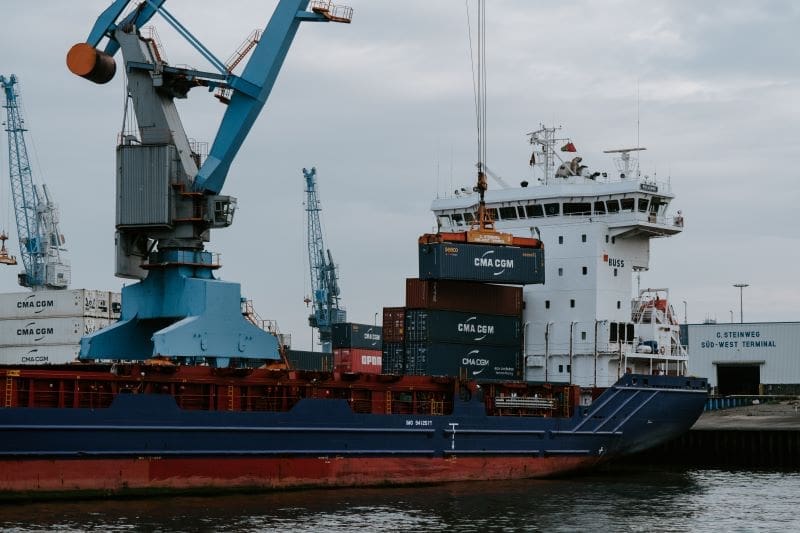
Shock MIL-STD-810 Method 516

Shock MIL-STD-810 Method 516
Photo By: Daniel P. Jackson Norgart

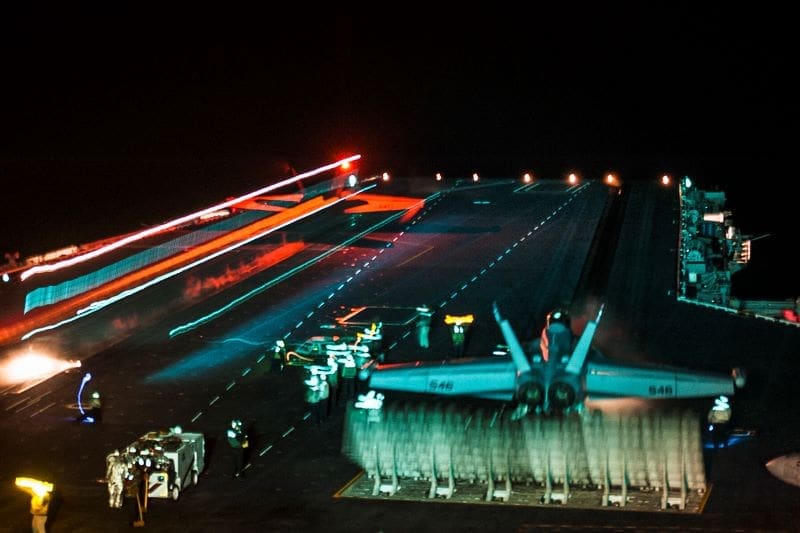
Shock MIL-STD-810 Method 516 is an environmental test that can be used to verify that equipment can withstand shocks encountered during transportation, service, and handling.  It can also be used to assess fragility levels for determination of stowage, packaging, or mounting requirements and is used to test the strength of devices such as fasteners to ensure that equipment does not create hazards in crash scenarios.

Mechanical Shock Characteristics

There are multiple types of shock addressed in Department of Defense Standard MIL-STD-810 including Gunfire Shock, Ballistic Shock, and Shipboard Shock.  Method 516 is focused on mechanical shocks.  These shocks generally are limited to durations of 0.1 seconds or less and comprised of frequencies below 4,000 Hz. 

These shocks cause the test item to respond to the forced frequencies of the shock profile and excitation of that item’s resonant frequencies.  These environmental stresses can lead to a large number of adverse effects on equipment’s physical and functional integrity.  These effects include, not only the expected deformations and accelerated fatiguing of components but can also include piezoelectric activities of electronic components and changes in electrical characteristics of components.

Procedures for Method 516 Shock

As of MIL-STD-810H change 1 there are eight procedures available for testing:

  • Procedure I – Functional Shock assesses the ability of equipment to operate during and after exposure to shocks representative of those expected to be experienced during the operational life cycle of the item.
  • Procedure II – Transportation Shock addresses shocks expected during logistic and tactical transportation phases of the life cycle.  
  • Procedure III – Fragility is normally conducted early in a product’s development to assess requirements for the design of packaging, stowage, and mounting configurations necessary to protect equipment.
  • Procedure IV – Transit Drop uses actual physical drop tests to assess probable accidental incidents caused by loading, unloading, or being carried by personnel.
  • Procedure V – Crash Hazard Shock Test is intended for components mounted in ground or air vehicles.  It assesses the design of materiel mounts, containment configurations, and tiedowns so as to prevent hazards to occupants and bystanders.
  • Procedure VI – Bench Handling replicates shocks that may be experienced during handling, maintenance, or packaging.  Requirements are based on the nature of the item to be tested and its use in its life cycle.
  • Procedure VII – Pendulum Impact is intended for large shipping containers.  It assesses the container’s ability to withstand horizontal impacts without inducing damage to intended cargo.
  • Procedure VIII – Catapult Launch/Arrested Landing is intended for equipment mounted on fixed wing aircraft that is expected to be subjected to take off and landings on aircraft carriers.

Considerations for Test Selection

 MIL-STD-810 testing for Method 516 Shock presents many possibilities for testing.  When considering which test scenarios to include in a test program, it is important to consider test duration, amplitude, and bandwidth of shock response spectrum profiles.  It is generally unfeasible to test for all shock profiles, so risk assessment is required to determine those shocks that present the greatest concern.

Detailed Environmental Test Plan Templates

CVG Strategy offers EZ Test Plan Templates for MIL-STD environmental (climatic/dynamic) and EMI/EMC test documentation.  Our Detailed Environmental Test Plans (DETP)s are written as specified in MIL-STD-810 Task 405.  They are available for specific applications such as Ground MobileGround Stationary, and Shipboard Controlled, Shipboard Uncontrolled, and Aircraft Military.

These DETPs include appropriate methods, (such as Shock MIL-STD-810 Method 516) addendums for product specific information, test labels for photo identification and data sheets for collection of required data. Profile (LCEP). 

Our Electromagnetic Interference Test Plans are written as specified in MIL-STD-461.  They contain the test methodology, addendums for product specific information, test labels for photo identification and data sheets.  These plans are available for procedures listed in MIL-STD-461 and are also available for MIL-STD-1275, MIL-STD-704, and MIL-STD-1399-300. 

Custom Test Plans are also available for applications not covered in the EZ Test Plan offerings.  These plans can be written for any number of applications and their relevant standards.

MIL-STD-810 Training Classes

CVG Strategy MIL-STD-810 classes will provide you with the ability to develop and conduct an environmental test program.  Our two day course not only provides you with valuable information about climatic and dynamic test methods but also includes training in the methodology to correctly apply test tailoring. 

This course is available online or onsite.  Ample time is available for questions and comments so that participants are encouraged to keep engaged.  Check here for our online Training Registration Schedule.

Put CVG Strategy’s Experience to Work for You

Companies of all sizes, from start up to established product developers, face challenges in product test and evaluation.  This can particularly be the case when a product is developed for a new market sector or expanding sales internationally.

Properly tested products prevent costly product recalls, product redesign, and product liability.  They maintain customer satisfaction and keep your company’s reputation in good standing.  Contact CVG Strategy to see how our services can assist your engineering team with Shock MIL-STD-810 Method 516 or any other test and evaluation concern.

Vibration MIL-STD-810 Method 514

Vibration MIL-STD-810 Method 514
Photo By: Air Force Senior Airman Alexander Cook

Vibration, MIL-STD-810 Method 514 evaluates equipment’s ability to withstand vibration exposures expected in a product’s life cycle.  These laboratory tests simulate environmental stresses that may be experienced during manufacture / maintenance, transportation, or operational life phases. 

This testing can be used for for development, qualification, or reliability purposes.  This method is not applicable for Environmental Stress Screening (ESS),  or multiple exciter testing.

Procedures for Vibration Method 514

Four procedures are available for vibration testing in this method:

Procedure I – General Vibration is for evaluating equipment that is to be transported or deployed for use on ground vehicles, fixed winged aircraft, or rotary wing aircraft. 

Procedure II – Loose Cargo Transportation replicates the vibration and shock environment of equipment being transported as loose cargo in military vehicles across rough terrain.  This procedure is performed on a package tester that applies a circular synchronous motion of 5 Hz in the vertical axis.

Procedure III – Large Assembly Transportation is performed with vehicles on test surfaces that are representative of expected operational or transportation phases in the test item’s life cycle.  These test surface courses are located at specific defense facilities such as U.S. Army Aberdeen Test Center. 

Procedure IV – Assembled Aircraft Store Captive Carriage and Free Flight uses laboratory shakers to replicate vibrational stresses encountered by equipment designed for under wing deployment during flight when attached to an aircraft and when released.

Considerations for Test Selection

Vibration testing presents many possibilities for testing.  When considering which test scenarios to include in a test scenario, it is important to consider test duration, amplitude, and bandwidth of vibration profiles. 

In many cases vibration experienced in transport may exceed those expected in operational modes.  In other cases operational vibration will be of greater severity.  In the end risk analysis is essential in identifying the optimal test and evaluation plan.

Tailoring Guidance

Given the highly technical nature of vibration testing, care must be taken when tailored testing is required. To address this issue Method 514 provides ample supplementary information in the included Annexes. 

  • Annex A provides engineering information for a variety of topics including: reliability testing, reliability growth testing, worthiness testing, Environmental Stress Screening (ESS), test time compression and fatigue relationship, and many other topics. 
  • Annex B provides guidance for Manufacture/Maintenance Vibration exposure.  It is useful in assisting in determining vibration levels and durations for testing concerns such as manufacturing and maintenance practices, shipping and handling, and Environmental Stress Screening.
  • Annex C contains information about transportation tailoring.  This includes guidance for setting design and test exposure values of many typical life cycle events.  It provides typical mission scenarios that include such information as standard military land vehicle transport distances from port staging areas to forward using units.  It also provides standardized vibration profiles for various vehicle types.
  • Annex D includes information concerning operational vibration in the life cycle of equipment.  This includes vibration profiles for fixed and rotary wing aircraft, aircraft stores, ground vehicles, missiles, and watercraft.
  • Annex E provides guidance for vibration specific to minimum integrity tests and cantilevered loads.
  • Annex F contains information critical to the development of vibration test schedules.  This is and extremely detailed annex and contains six appendices.

Detailed Environmental Test Plan Templates

CVG Strategy offers EZ Test Plan Templates for MIL-STD environmental (climatic/dynamic) and EMI/EMC test documentation.  Our Detailed Environmental Test Plans (DETP)s are written as specified in MIL-STD-810 Task 405.  They are available for specific applications such as Ground MobileGround Stationary, and Shipboard Controlled, Shipboard Uncontrolled, and Aircraft Military.

These DETPs include appropriate methods, (such as Vibration MIL-STD-810 Method 514) addendums for product specific information, test labels for photo identification and data sheets for collection of required data. Profile (LCEP). 

Our Electromagnetic Interference Test Plans are written as specified in MIL-STD-461.  They contain the test methodology, addendums for product specific information, test labels for photo identification and data sheets.  These plans are available for procedures listed in MIL-STD-461 and are also available for MIL-STD-1275, MIL-STD-704, and MIL-STD-1399-300. 

Custom Test Plans are also available for applications not covered in the EZ Test Plan offerings.  These plans can be written for any number of applications and their relevant standards.

MIL-STD-810 Training Classes

CVG Strategy MIL-STD-810 classes will provide you with the ability to develop and conduct an environmental test program.  Our two day course not only provides you with valuable information about climatic and dynamic test methods but also includes training in the methodology to correctly apply test tailoring. 

This course is available online or onsite.  Ample time is available for questions and comments so that participants are encouraged to keep engaged.  Check here for our online Training Registration Schedule.

Put CVG Strategy’s Experience to Work for You

Companies of all sizes, from start up to established product developers, face challenges in product test and evaluation.  This can particularly be the case when a product is developed for a new market sector or expanding sales internationally.

Properly tested products prevent costly product recalls, product redesign, and product liability.  They maintain customer satisfaction and keep your company’s reputation in good standing.  Contact CVG Strategy to see how our services can assist your engineering team with Vibration MIL-STD-810 Method 514 or any other test and evaluation concern.

Acceleration MIL-STD-810 Method 513

acceleration mil-std-810 method 511
Photo By: Air Force Senior Airman Patrick Sullivan

Acceleration MIL-STD-810 Method 513 is a test method used to evaluate equipment’s ability to withstand steady state inertia loads and ensure that the test item does not create a hazard after being subjected to crash inertia loads.  This testing is intended primarily for equipment that will be installed on aircraft, helicopters, aerospace vehicles, aircraft stores, and ground-launched missiles.  Acceleration should not be mistaken for shock which excites a dynamic resonant response as opposed to a steady inertial stress.  

Procedures for Acceleration 

Four test procedures are available for acceleration testing:

  • Procedure I – Structural Test; ensures that equipment can structurally withstand in service acceleration loads.
  • Procedure II – Operational Test; Is used to evaluate equipment’s ability to operate while being subjected to acceleration g forces expected in its service environment.
  • Procedure III – Crash Hazard Acceleration Test; is used to ensure that restraining mechanisms such as fasteners do not fail in a crash scenario, creating a hazard to personnel or blocking paths of ingress and egress.
  • Procedure IV – Strength Test; added in revision H, uses sine burst testing on a vibration table to expose the test item to quasi-static loads.

Selection of tests to be performed should be based on requirements and criteria derived from the Life Cycle Environmental Profile (LCEP).  This testing should be conducted after environmental transportation and storage methods towards the end of the test sequence.

Test Levels 

System specific g levels for various platforms are provided in the standard.  These designate values for fore, aft, up, down, and lateral axes.  While these values are representative of forces expected in vehicle types, measured data should be used when available.  

Levels for fighter and attack aircraft include provisions for materiel that is intended for locations away from the aircraft’s center of gravity.  Formulae are provided for calculating the additional loads experienced in roll, pitch and yaw maneuvers in various directions.  

Test Apparatus for Performing Acceleration Testing

Acceleration testing can be performed using different types of test equipment.  For most applications, centrifuge testing is performed due to scheduling and budget considerations.  However, when required, Track/rocket powered sled testing can be performed.  Due to vibration caused by the rocket engine and track roughness, sled testing is generally more severe than that expected in general service life of the test item.

Additionally, sine burst testing is used for Procedure IV.  This testing, although limited in its level of evaluation, offers an economical alternative for verification testing performed early in development because vibration tables are generally more available and testing on them requires less set up time.

Detailed Environmental Test Plan Templates

CVG Strategy offers EZ-Test Plan Templates for MIL-STD environmental (climatic/dynamic) and EMI/EMC testing documentation.  Our Detailed Environmental Test Plans (DETP)s are written as specified in MIL-STD-810 Task 405.  They are available for specific applications such as Ground MobileGround Stationary, and Shipboard Controlled, Shipboard Uncontrolled, and Aircraft Military.

These DETPs include appropriate test methods, (such as Acceleration Mil-Std-810 method 513) addendums for product specific information, test labels for photo identification and data sheets for collection of required data. Profile (LCEP). 

Our Electromagnetic Interference Test Plans are written as specified by the Department of Defense.  They contain the test methodology, addendums for product specific information, test labels for photo identification and data sheets.  These plans are available for procedures listed in MIL-STD-461 and are also available for MIL-STD-1275, MIL-STD-704, and MIL-STD-1399-300 testing standards. 

Custom Test Plans are also available for applications not covered in the EZ-Test Plan offerings.  These plans can be written for any number of applications and their relevant standards.

MIL-STD-810 Training Classes

CVG Strategy MIL-STD-810 classes will provide you with the ability to develop and conduct an environmental test program.  Our two day course not only provides you with valuable information about climatic and dynamic test methods but also includes training in the methodology to correctly apply test tailoring. 

This course is available online or onsite.  Ample time is available for questions and comments so that participants are encouraged to keep engaged.  Check here for our online Training Registration Schedule.

Put CVG Strategy’s Experience to Work for You

Companies of all sizes, from start up to established product developers, face challenges in product test and evaluation.  This can particularly be the case when a product is developed for a new market sector or expanding sales internationally.

Properly tested products prevent costly product recalls, product redesign, and product liability.  They maintain customer satisfaction and keep your company’s reputation in good standing.  Contact CVG Strategy to see how our testing services can assist your engineering team with MIL-STD-810 acceleration testing or any other product test and evaluation concern.

Immersion MIL-STD-810 Method 512

Immersion MIL-STD-8710 Method 512
Photo by Tyler Lastovich

Immersion MIL-STD-810 Method 512 is used to evaluate the ingress protection capabilities of products against water intrusion.  This is normally used for military equipment where immersion in water is a probable event in that product’s life cycle, including logistical and tactical transport.  Performance of this testing does not necessarily preclude a requirement for Blowing Rain testing, as this environmental stressor presents different challenges for gasket design.

Procedures for Immersion 

There are two test procedures available for Immersion testing.  Procedure I (Immersion) evaluates the ability of enclosed equipment to withstand water immersion.  Procedure II (Fording) evaluates vehicles traversing a body of water or material secured to such vehicles.  As in other MIL-STD-810 test methods, operational testing is required when indicated by requirements or the Life Cycle Environmental Profile (LCEP).

Typical complete immersion duration is 30 minutes for both procedures.  For Procedure I, a standard depth of 3.28 ft (1 m) is used.  This depth is measured from the surface of the water to the top of the test item.  For Procedure II test depth is determined by the class of vehicle the equipment is designed for. 

When testing to depths greater than 1 meter is required, a pressure vessel may be used with the test item completely submerged.

Pretest Temperature Conditioning 

Temperature differentials between the test item and water are known to increase the likelihood of ingress.  This is caused by pressure differentials created as enclosure interiors cool.  Therefore, it is required to preheat the test item before immersion. 

For items that are subject to heating due to solar radiation, the prescribed temperature is 49 °F (27 °C) above the measured water temperature.  For other items the Unit Under Test (UUT) should be preheated to 18 °F (10 °C) above water temperature.  It is important to ensure that the item has been heated such that the item interior temperature meets requirements.  Where the interior temperature is unknown, the item should be heated for two hours.

When the item being tested is too large for a test facility’s environmental chambers, testing can be performed without preheating if the immersion depth is compensated for the calculated pressure differential that would be caused by heating.

IEC 60529 Ingress Protection

IEC 60529 Ingress Protection is a commercial standard for evaluation.  This method includes dust and penetration tests, water splash, immersion, water jet spray, and high pressure and temperature water jet spray testing.  This standard is typically applied to commercial products and their ability to keep the environment from interfering with the operation of a product.

The standard includes equipment ingress classifications (IP code) defined by the letters IP followed by two digits and an optional letter. As defined in international standard IEC 60529, it classifies the degrees of protection provided against the intrusion of solid objects (including body parts like hands and fingers), dust, accidental contact, and water in electrical enclosures.

Detailed Environmental Test Plan Templates

CVG Strategy offers EZ-Test Plan Templates for MIL-STD environmental (climatic/dynamic) and EMI/EMC testing documentation.  Our Detailed Environmental Test Plans (DETP)s are written as specified in MIL-STD-810 Task 405.  They are available for specific applications such as Ground MobileGround Stationary, and Shipboard Controlled, Shipboard Uncontrolled, and Aircraft Military.

These DETPs include appropriate test methods, (such as Immersion MIL-STD-810 Method 512) addendums for product specific information, test labels for photo identification and data sheets for collection of required data. Profile (LCEP). 

Our Electromagnetic Interference Test Plans are written as specified by the Department of Defense.  They contain the test methodology, addendums for product specific information, test labels for photo identification and data sheets.  These plans are available for procedures listed in MIL-STD-461 and are also available for MIL-STD-1275, MIL-STD-704, and MIL-STD-1399-300. 

Custom Test Plans are also available for applications not covered in the EZ-Test Plan offerings.  These plans can be written for any number of applications and their relevant standards.

MIL-STD-810 Training Classes

CVG Strategy MIL-STD-810 classes will provide you with the ability to develop and conduct an environmental test program.  Our two day course not only provides you with valuable information about climatic and dynamic test methods but also includes training in the methodology to correctly apply test tailoring. 

This course is available online or onsite.  Ample time is available for questions and comments so that participants are encouraged to keep engaged.  Check here for our online Training Registration Schedule.

Put CVG Strategy’s Experience to Work for You

Companies of all sizes, from start up to established product developers, face challenges in product test and evaluation.  This can particularly be the case when a product is developed for a new market sector or expanding sales internationally.

Properly tested products prevent costly product recalls, product redesign, and product liability.  They maintain customer satisfaction and keep your company’s reputation in good standing.  Contact CVG Strategy to see how our testing services can assist your engineering team with Immersion MIL-STD-810 Method 512.5, IEC 60529 or any other test and evaluation concern.
CGP Security Plan Development Requirements

CGP Security Plan
CGP Security Plan
Photo by Social Soup

Canadian Controlled Goods Program (CGP) security plans are a requirement for work sites where goods are examined, possessed, or transferred.  This is a requirement for all companies registered in the CGP as described in section 10 of the Controlled Goods Regulations.  

Controlled goods are primarily items, components and technical data that have been designated as having military or national security significance including International Traffic in Arms Regulations (ITAR) items.  These goods are controlled by the Canadian government under the Defence Production Act.  Controlled goods can be in the form of tangible items such as parts or components, printed material or electronic data.

Developing a Security Plan

A unique plan must be implemented for each business location of the registered organization.  The plans must be based on a risk assessment for each location based on the specific goods stored, location of site, and levels of criminal activity in the area.  This security assessment will allow for informed decision making as to the extent of measures to be taken.

The security plan should include a list of security responsibilities that identifies the individuals involved in those activities.  It should include procedures to control the transfer, possession, or examination of controlled goods.  It should also include documented procedures for reporting security breaches.  Additionally, the plan should include training programs for export compliance team members.

Security briefings for visitors who be on site to examine, possess, or transfer controlled goods should be described in procedures.  Visitors not exempt from the program must not be allowed access to controlled items.

Documented Procedures for Monitoring Controlled Goods

It is essential to document what specific controlled goods the company is working with.  These should be categorized as components, physical objects, written documents, or digital information.  The procedures must then identify how those items are to be received, stored, and transferred.

Security breaches that result int the theft, loss, unlawful examination, transfer, or possession of controlled goods must be reported.  Documented procedures must be in place that describe the investigative steps the company will take in response to these incidents.

Putting the Plan in Action

Once a plan has been created, it must be approved by a compliance inspector. The inspector will guarantee that the plan complies with the regulations set forth by the Controlled Goods Regulations and is suitable for the company and its particular location.

A security plan must be in effect during the entire period that the organization is registered with the Controlled Goods Directorate.  As with any management plan, the security plan must be regularly reviewed to ensure effectiveness.  Upon review, where deficiencies or opportunities for improvement are identified, the program should be updated accordingly.

CVG Strategy Export Compliance Management Programs

Establishing a CGP security plan is an important part of this complex set of export regulations.  Failure to follow these regulations can result in fines, penalties, and imprisonment.  CVG Strategy export compliance experts can help you establish and maintain a viable Canadian Export Compliance Management Program. 

CVG Strategy has been helping our clients with their export compliance programs for over a decade.  We can also assist with product Export Control Classification Determination.    Our experts can also provide guidance and the essential training to ensure that your personnel understand these important laws.

Explosive Atmosphere MIL-STD-810 Method 511

Explosive Atmosphere MIL-STD-810
Photo By: Navy Petty Officer 2nd Class Haydn Smith

Explosive Atmosphere, MIL-STD-810, Method 511, is used to evaluate how equipment will function in an explosive fuel-air environment.  This method has two procedures.  Procedure I – Explosive Atmosphere evaluates the ability of equipment to operate in a fuel-air environment without causing the fuel air mixture to ignite.  Procedure II – Explosive Containment evaluates the equipment’s ability to contain an explosion resulting from a malfunction.

This testing is appropriate for equipment designed for environments where aircraft, automotive, and marine fluids or vapors exist.  The test is representative of conditions at or above sea level where flammable fluids or vapors are present.  This testing is performed in a test chamber and should only be performed by qualified personnel.

Test Fuel

These tests normally use N-hexane for fuel sources as these have similar properties to JP-4 and JP-8 jet engine fuel, and high-octane aviation gasoline.  It is important to keep in mind that N-hexane is a hazardous material and that exposure to humans should be limited.  

The fuel-air ratios are specified in detail for the explosive atmosphere test.  These ratios must be homogeneous in the test chamber.  Temperature for chamber is to be the highest ambient temperature that the test item is to operate in during its life cycle.  

Altitude Simulation

Because the corona effect makes electrical devices more susceptible to arcing and creating sparks, both procedures are performed at simulated altitudes.  For Procedure I the test item is normally exposed to a chamber pressure of 40,000 ft. (12,200 m) plus 6,600 ft (2,000 m). 

The specified volume of n-hexane is introduced into the chamber and is allowed to mix and circulate with the chamber air.  The pressure is then adjusted to 40,000 ft. (12,200 m).  After each chamber pressure and corresponding n-hexane a test sample of the fuel-air mixture is subjected to a spark to verify the mixture’s explosiveness. 

Because of the low levels of oxygen present at the 40,000 ft. level, ignition may not always occur.  If the test sample is not ignited the chamber must be purged and the test restarted.

If the fuel-air mixture is verified, then the test item is exercised to simulate all operational modes.  If the test item does not cause ignition, the sequence is repeated for at least three more sequences at lower altitudes.  The final test occurring at site ambient pressure.

Procedure II Test Sequence

For Procedure II – Explosion Containment, the test item of model of same volume is installed into the test chamber.  Humidity, dew point and specified operating temperatures are established in the chamber.  The air pressure is set for a simulated altitude of 6,600 ft (2,000 m). 

The fuel-air mixture is introduced, and the chamber pressure is returned to site ambient pressure.  The mixture within the test item is ignited and if explosion occurs the test is complete.

Detailed Environmental Test Plan Templates

CVG Strategy offers EZ Test Plan Templates for MIL-STD environmental (climatic/dynamic) and EMI/EMC test documentation.  Our Detailed Environmental Test Plans (DETP)s are written as specified in MIL-STD-810 Task 405.  They are available for specific applications such as Ground Mobile, Ground Stationary, and Shipboard Controlled, Shipboard Uncontrolled, and Aircraft Military.

These DETPs include appropriate methods, (such as Explosive Atmosphere MIL-STD-810 Method 511) addendums for product specific information, test labels for photo identification and data sheets for collection of required data. Profile (LCEP). 

Our Electromagnetic Interference Test Plans are written as specified in MIL-STD-461.  They contain the test methodology, addendums for product specific information, test labels for photo identification and data sheets.  These plans are available for procedures listed in MIL-STD-461 and are also available for MIL-STD-1275, MIL-STD-704, and MIL-STD-1399-300. 

Custom Test Plans are also available for applications not covered in the EZ Test Plan offerings.  These plans can be written for any number of applications and their relevant standards.

Put CVG Strategy’s Experience to Work for You

Companies of all sizes, from start up to established product developers, face challenges in product test and evaluation.  This can particularly be the case when a product is developed for a new market sector or expanding sales internationally.

Properly tested products prevent costly product recalls, product redesign, and product liability.  They maintain customer satisfaction and keep your company’s reputation in good standing.  Contact CVG Strategy to see how our services can assist your engineering team with Explosive Atmosphere MIL-STD-810 Method 511 or any other test and evaluation concern.

 

BIS Assessing Civil Space Industrial Base

BIS Assessing Civil Space

The Bureau of Industry and Security (BIS) is Assessing the Civil Space Industrial Base in the United States in partnership with the National Oceanic and Atmospheric Administration (NOAA) and the National Aeronautics and Space Administration (NASA) to better understand this important supply chain network.  This study will use surveys to collect data from U.S. organizations involved in the research, design, and manufacture of space related products and services.  It will involve research centers, commercial entities, universities, and laboratories.

Reasons for CSIB Assessment

The BIS, under the auspices of the Department of Commerce, and the Office of Technology Evaluation (OTE) are evaluating the U.S. Civil Space Industrial Base (CSIB) by means of the authority of Section 705 of the Defense Production Act and Executive Order 13603.  The intent is to gather information that will provide guidance for the formation of governmental policies and proposals.

These policies are generated in an effort to protect and advance U.S., national security, foreign policy concerns, and economic base. The assessment was requested jointly by NASA, NOAA, The NOAA Office of Space Commerce (OSC), and the National Environmental Satellite, Data, and Information Services (NEDIS).  Members of the commercial space sector that are chosen for involvement in this study will be required to participate.  Although this assessment is a one-time event the possibility for further studies is possible.

The Complexities of Export Compliance

The BIS has been changing its scope and enforcement policies in recent years to address the increased complexities of the international political arena.  Export Administration Regulations have continually been changing as more items are being added to the Commerce Control List (CCL).  Additionally, the agency has increased its focus on the use of sanctions and denied parties lists to protect these sensitive technologies.

As the BIS places controls on a growing number of technologies, it poses challenges for organizations involved in export transactions.  If a business produces or provides military articles or services, there is at the very least an understanding that ITAR export controls will probably be in place.  For those involved in dual-use items however, the requirements for export compliance are much less clear.

CVG Strategy Export Compliance Expertise

The BIS Assessing Civil Space Industrial Base is just one example of the U.S. government’s and its international partner’s concern for developing controls that will ensure that potentially threatening technologies are not exported to hostile entities.  In the past several years, the BIS, along with its international partners have greatly increased their activities in the generation and enforcement of regulations.

If you are part of a large corporation or a small company with a part-time compliance person, CVG Strategy has the compliance and training programs to help you meet International Traffic in Arms Regulations (ITAR) and Export Administration Regulations (EAR) rules and requirements.  As the BIS place controls on a growing number of technologies it becomes increasing difficult for smaller businesses to stay abreast of regulatory developments.  Because of this, we provide Export Compliance Management Programs (ECMP) for businesses of all sizes.  

CVG Strategy, LLC is recognized the world over as the premier provider of Export Compliance Consulting and Export Compliance Programs for businesses involved in export in the U.S. and Canada.  We also provide the essential training that ensures that your team is up to date on governmental regulations, including the Export Administration Regulations (EAR), the International Traffic in Arms Regulations (ITAR), the Canadian Controlled Goods Program, and Office of Foreign Asset Controls (OFAC) and other regulatory agencies and more.

Temperature Shock MIL-STD-810 Method 503

Temperature Shock MIL-STD-810 Method 503

MIL-STD-810 Temperature Shock testing (Method 503) is used to evaluate equipment’s ability to withstand sudden changes in temperature.  This laboratory test method is conducted in environmental test chambers and can be tailored to replicate the anticipated thermal profiles during storage, transit, and operation.  Such shock could be experienced when a jet fighter on a tarmac in the desert rapidly climbs to high altitudes or conversely an article being air delivered by means of parachute to a high temperature environment.

Rapid change in temperature per this standard is defined as a change greater than 18 °F (10°C) per minute.  Exposure to these environmental stresses can cause failures due to differential expansion and contraction of dissimilar materials.  It can cause failures in electronics due to changes in components due to temperature changes.  It can also cause failures in equipment due to the formation of frost.

Procedure Selection

The military standard MIL-STD-810 provides four test procedures for Temperature Shock: 

  • Procedure I-A: One-way Shock(s) from constant extreme temperature  This procedure is appropriate for equipment that will be not regularly exposed to thermal shock and when those shocks will occur only in one direction.  Equipment air dropped from aircraft would be an example.
  • Procedure I-B:  Single Cycle Shock from constant extreme temperature  This is intended for equipment that is expected to be exposed to a single shock in each direction.
  • Procedure I-C:  Multi-cycle shocks from constant extreme temperature  An example of this would be a jet fighter taking off from a desert location and then landing at the same location. 
  • Procedure I-D:  Shocks to or from controlled ambient temperatures  This would be applicable to equipment that is stored in environmentally controlled structures that must work in extreme hot or cold environments.

Determining Appropriate Test Values

It is necessary to tailor appropriate test temperature cycle and temperature range values from requirements, measurements, and those derived from the Life Cycle Environmental Profile (LCEP).  Geographic climatic information is available in Part 3 of the standard to assist in value determinations.  As with most MIL-STD-810 methods, measured data when available is preferred for determining test values.  This is particularly the case in situations in which solar radiation may be a factor in determining maximum temperatures.

Generally, humidity is not a factor in Temperature Shock testing, but when required appropriate values should be determined based on expected areas of use.  For testing of Air delivery the standard recommends a starting temperature equivalent to that found at 26,000 ft (8 km).  These environmental conditions can be found in Method 520 Combined Environments.

Considerations During Testing

Temperature chambers specifically designed for thermal shock testing incorporate dual chambers side by side or on top of each other that allow a rapid transfer between the two test temperatures.  Generally, availability of these chambers at test facilities is limited.  When these chambers are not available the Unit Under Test (UUT) must be transferred between two separate chambers as quickly as possible. 

Transfer time should be recorded during testing and be included in any required post test reporting.  MIL-STD-810 encourages transfers between chambers to one minute or less.  This can be challenging when the item is being tested in an operational mode or where the test item is large.  When this is the case, justification for longer periods of transfer should be documented.

Detailed Environmental Test Plan Templates

CVG Strategy offers EZ-Test Plan Templates for MIL-STD environmental (climatic/dynamic) and EMI/EMC testing documentation.  Our Detailed Environmental Test Plans (DETP)s are written as specified in MIL-STD-810 Task 405.  They are available for specific applications such as Ground Mobile, Ground Stationary, and Shipboard Controlled, Shipboard Uncontrolled, and Aircraft Military.

These DETPs include appropriate test methods, (such as MIL-STD-810 Temperature Shock) addendums for product specific information, test labels for photo identification and data sheets for collection of required data. Profile (LCEP). 

Our Electromagnetic Interference Test Plans are written as specified by the Department of Defense.  They contain the test methodology, addendums for product specific information, test labels for photo identification and data sheets.  These plans are available for procedures listed in MIL-STD-461 and are also available for MIL-STD-1275, MIL-STD-704, and MIL-STD-1399-300. 

Custom Test Plans are also available for applications not covered in the EZ-Test Plan offerings.  These plans can be written for any number of applications and their relevant standards.

Put CVG Strategy’s Experience to Work for You

Companies of all sizes, from start up to established product developers, face challenges in product test and evaluation.  This can particularly be the case when a product is developed for a new market sector or expanding sales internationally.

Properly tested products prevent costly product recalls, product redesign, and product liability.  They maintain customer satisfaction and keep your company’s reputation in good standing.  Contact CVG Strategy to see how our testing services can assist your engineering team with MIL-STD-810 Low Temperature Testing or any other test and evaluation concern.

Disruptive Technology Strike Force to Enforce EAR

Disruptive Technology Strike Force

The Department of Commerce has initiated the Disruptive Technology Strike Force which will partner the Bureau of Industry and Security (BIS) with the Department of Justice (DoJ) in the enforcement of the Export Administration Regulations (EAR).  Export Administration Regulations (EAR) control the export of commodities determined to be dual-use.  Dual-use items refer to commodities and technologies that normally are used for civilian purposes but may also be used for military purposes.  The specific regulations can be found in 15 CFR §730.

Agencies now included in this enforcement will include the FBI and Homeland Security Investigations (HFI).  This ongoing enforcement will include fourteen different U.S. Attorney’s Offices centered in twelve metropolitan regions.  These regions include Boston, Atlanta, Chicago, Dallas, Houston, Los Angeles, Miami, New York City, San Jose, Phoenix, Portland and Washington D.C.

Actions to Protect Sensitive Technologies

These joint actions are being taken to target illicit actors attempting to acquire and export sensitive technologies from the United States to Russia, North Korea, Iran, and China.  These states are using these technologies to enhance their military capabilities which, aside from posing a threat to U.S. national security can also be used to enable actions against human rights.  Additionally these violations of export controls threaten economic security by threatening business that create these advanced technologies.

Pulling Out All the Stops

In enacting this enforcement U.S. enforcement agencies will use use advanced data analytics, and enhanced intelligence to coordinate actions.  They will be performing more training of field agents and furthering coordination between agencies in the Intelligence Community.  Furthermore there will be efforts to enhance partnerships in the private sector as well as with international partners.

The strike force will fall under the joint leadership of Assistant Attorney General Matthew G. Olsen from the National Security Division of the Justice Department and Matthew Axelrod who serves as Assistant Secretary for Export Enforcement from the Bureau of Industry and Security.

Semiconductors a Focus

The BIS has been specifically focusing on the export of semiconductors and technologies involved with the design an manufacture of semiconductors.  In May of 2022,  the BIS added export controls pursuant to Section 1758 on two substrates of ultra-wide bandgap semiconductors and Electrical Computer Aided Design (ECAD) tools.  These actions are being taken because these types of devices have significant potential for use in military applications.  Effected ECCN classifications are listed in Document Number 2022-17125.

A Call to Actions for Businesses Involved in Export

The announcement of the Disruptive Technology Strike Force shows the Department of Commerce’s commitment to continue ramping up enforcement of Export Administration Regulations.  This action is the latest in a series of steps that show how serious the U.S. government is in protection of dual use items.  Additionally, partners of the U.S. are coordinating efforts to enforce export control laws.  Aside from enforcement, penalties both civil and criminal are increasing.

Businesses must ensure that they do not violate export regulations by enacting viable Export Compliance Management Programs (ECMP).   These programs are a requirement for both the Export Administration Regulations and the International Traffic in Arms Regulations (ITAR).  While businesses involved with the ITAR have been proactive in compliance, many involved with the export of dual-use goods enumerated in the EAR have been less diligent.

Export Compliance Management Programs establish clearly defined policies and procedures for all departments within an organization.  They ensure that registration, item classifications, license applications, denied part screening, and security measures are taken that will prevent violation.  They also ensure that training, auditing, and record keeping are maintained according to requirements.

CVG Strategy Export Compliance Management Programs

Export Compliance is an important subject for businesses engaged in sales of items that are intended for international sales or could result in international sales.  Failure to comply with regulations can result in criminal prosecution including imprisonment and fines.  It can also result in civil penalties and disbarment from export activities. 

CVG Strategy can help you in understanding Export Administration Regulations and establishing a coherent and effective export compliance system.   We can perform export control classifications, perform audits, and educate your team.  Regardless of whether your business falls under EAR or ITAR, CVG Strategy has the expertise to help.  Contact Us with you export regulation questions.

Secret Link