


Humidity MIL-STD-810 Method 507

Humidity MIL-STD-810 Method 507

Humidity MIL-STD-810 Method 507 is used to evaluate the ability of products to resist the effects of exposure to warm humid climates.  This evaluation can be performed in a test facility using environmental chambers where costs or product scheduling is a consideration.  The method provides test cycles for natural or induced exposures representative of a variety of global exposures.

Effects of Humidity Exposure

Temperature-humidity conditions can have a wide array of effects on equipment.  It can cause accelerated oxidation of metals, increase the rate of chemical reactions, breakdown coatings, interact with dusts and other deposits to create corrosive film, and cause binding or sticking.  Additionally, it can cause changes in the properties of materials that result in loss of strength, delamination, degradation of lubricants, and degradation of insulators.  When allowed to condense, humidity can cause short circuits and change thermal transfer characteristics.

Limitations of Laboratory Testing

Laboratory testing cannot replicate all the effects associated in a natural environment in humid areas. The method is intended to simulate a stressful environmental condition that can reveal potential problem areas in equipment design or choice of materials.  Specifically this test method does not address condensation caused by changes of pressure for airborne equipment or the synergetic effects of multiple environmental stressors.

Procedures for Humidity Testing

There are two humidity testing procedures available for Humidity in MIL-STD-810: 

  • Procedure I – Induced and Natural Cycles are designed to replicate natural exposures to warm humid environments.  Induced cycles are designed to replicate conditions in contained environments where air circulation is limited such as storage and transit conditions.   
  • Procedure II – Aggravated does not replicate naturally occurring cycles of humidity but exposes the test item to extreme temperature and humidity for shorter durations (usually 10 twenty-four-hour cycles).  This can be useful for ascertaining if the test item is susceptible to humidity, but the standard recommends caution in the interpretation of results.

Humidity Cycles

MIL-STD-810 in conjunction with MIL-HDBK-310 and NATO STANAG 4370 define three geographical categories for humidity that are applicable to Procedure I:

  • Constant high humidity (B1) is typical of tropical areas, and seasonally, some mid-latitude locations.  These locations are typically in heavily forested areas during rainy seasons where solar radiation exposure is unlikely.  
  • Cyclic high humidity (B2) can be found in the same locations as B1 but where forest cover is limited (such as in urban areas) and solar radiation creates a more differentiated diurnal exposure.  
  • Hot-Humid (B3) represents conditions that occur on a narrow coastal strip in the Red Sea and Persian Gulf.  These conditions occur naturally about 10 to 15 times a year.  Although this cycle is in many ways the most extreme, it is not to be used in lieu of testing in other exposures if expected in the Life Cycle Environmental Profile (LCEP).

The standard provides diurnal cyclical test schedules for all three environmental profiles for both natural and induced conditions.

Test Durations

An effective humidity test requires long periods of exposure.  This can place strains on schedules and budgets, especially when multiple profiles must be run.  Test duration requirements are broken down into two categories, hazardous items and nonhazardous items.  Hazardous items are defined as equipment that if subject to unknown deterioration could result in damage to equipment or result in injury or death to personnel.  

For humidity cycles B1 and B2 this means that for hazardous items, a minimum of ninety cycles is required to simulate natural exposures and one hundred and eighty for induced (storage and transit).  For non-hazardous items the durations are half of these values.  B3 cycle durations are thirty for hazardous and fifteen for non-hazardous.  

As previously mentioned, Aggravated humidity, requires a minimum of ten cycles which can make it an attractive alternative if permitted by requirements or when perceived vulnerability to humidity exposure is minimal.  

Test Sequence Considerations

Prolonged exposures to humidity may compromise the integrity of seals, coatings, and plastics among other components.  It therefore is not advisable to use the same item for this method as for Salt Fog/Corrosive Environments, Sand and Dust, Acidic Atmosphere, or Fungus.  Additionally, the standard recommends performing dynamic testing, such as shock and vibration, prior to humidity, as the cumulative effects of these tests could identify design flaws.

Detailed Environmental Test Plan Templates

CVG Strategy offers EZ Test Plan Templates for MIL-STD environmental (climatic/dynamic) and EMI/EMC test documentation.  Our Detailed Environmental Test Plans (DETP)s are written as specified in MIL-STD-810 Task 405.  They are available for specific applications such as Ground Mobile, Ground Stationary, and Shipboard Controlled, Shipboard Uncontrolled, and Aircraft Military.

These DETPs include appropriate methods, (such as Humidity MIL-STD-810 Method 507) addendums for product specific information, test labels for photo identification and data sheets for collection of required data. Profile (LCEP). 

Our Electromagnetic Interference Test Plans are written as specified in MIL-STD-461.  They contain the test methodology, addendums for product specific information, test labels for photo identification and data sheets.  These plans are available for procedures listed in MIL-STD-461 and are also available for MIL-STD-1275, MIL-STD-704, and MIL-STD-1399-300. 

Custom Test Plans are also available for applications not covered in the EZ Test Plan offerings.  These plans can be written for any number of applications and their relevant standards.

Put CVG Strategy’s Experience to Work for You

Companies of all sizes, from start up to established product developers, face challenges in product test and evaluation.  This can particularly be the case when a product is developed for a new market sector or expanding sales internationally.

Properly tested products prevent costly product recalls, product redesign, and product liability.  They maintain customer satisfaction and keep your company’s reputation in good standing.  Contact CVG Strategy to see how our services can assist your engineering team with Humidity MIL-STD-810 Method 507 or any other test and evaluation concern.

MIL-STD-810 Training Classes

CVG Strategy MIL-STD-810 classes will provide you with the ability to develop and conduct an environmental test program.  Our two-day course not only provides you with valuable information about climatic and dynamic test methods but also includes training in the methodology to correctly apply test tailoring relevant to the test item’s expected life cycle. 

This course is available online or onsite.  Ample time is available for questions and comments so that participants are encouraged to keep engaged.  Check here for our online Training Registration Schedule.

Rain MIL-STD-810 Method 506

Rain MIL-STD-810 Method 506
Photo by Anand Rao Bhaskar

Rain, MIL-STD-810, Method 506 is used to evaluate materiel likely to be exposed to rain, water spray, or dripping water during storage, transit, or operation.  It can  also be used to evaluate seals, enclosures, and covers to prevent ingress of water, access effectiveness of water removal systems, and evaluate the physical deterioration of materials due to exposure to water.

The method is not appropriate, however, for evaluating the effects of flight through rain, evaluation of pressure washers or decontamination devices, or the effects of extended light precipitation.  It is also not intended for evaluating equipment to atmospheric effects caused by rain. 

Available Procedures for Rain Testing

MIL-STD-810 has three procedures to evaluate materials ability to withstand rain:

  • Procedure I – Rain and Blowing Rain is used to evaluate items that  will be deployed in conditions that are unprotected from rain.  This procedure uses a rainfall drip rate of 4 inches per hour (1.7 mm per minute) as a minimum for testing. 

The simulated rain must be comprised of droplets of approximately 500 μm in diameter.  Unless otherwise tailored, the test uses a wind velocity of 40 mph (18 m/s).   The test item should be stabilized to a temperature 18 °F (10 °C) higher than the water being used for rain. 

  • Procedure II – Exaggerated uses rain simulated with overlapping pressure nozzles.  This method is often used when the test item is too large to be tested with the blowing rain method.  While it does not simulate rain, it can be used to a degree of confidence in the watertightness of an item.  The test incorporates a 50 psig (276 kPa) pressure with a flow rate of 5.5 gallons per minute (20.8 liters per minute).
  • Procedure III – Drip is used to simulate the conditions where items may be exposed to falling water from leakage in a storage area or drops caused by condensation.  This test uses a minimum rate of 7 gallons per square foot per hour (280 liters per square meter per hour).

The Challenges of Preventing the Penetration of Water

Wind blown rain creates resonances that can penetrate gasketing materials used in covers, cases, and seals. In many cases, test items that have passed immersion testing can still have ingress problems with blowing rain.  These problems create issues for designers in any number of fields where rain exposure is expected.  Where MIL-STD testing is not applicable, other standards are available for ingress protection testing such as IEC 60529. 

IEC 60529 is typically applied to commercial products and their ability to keep the environment from interfering with the operation of a product. Ratings are defined by the letters IP followed by two digits and an optional letter.  It classifies the degrees of protection provided against the intrusion of solid objects (including body parts like hands and fingers), dust, accidental contact, and water in electrical enclosures. The standard aims to provide users more detailed information than vague marketing terms such as waterproof.

Detailed Environmental Test Plan Templates

CVG Strategy offers EZ-Test Plan Templates for MIL-STD environmental (climatic/dynamic) and EMI/EMC testing documentation.  Our Detailed Environmental Test Plans (DETP)s are written as specified in MIL-STD-810 Task 405.  They are available for specific applications such as Ground MobileGround Stationary, and Shipboard Controlled, Shipboard Uncontrolled, and Aircraft Military.

These DETPs include appropriate test methods, (such as Rain MIL-STD-810 Method 506) addendums for product specific information, test labels for photo identification and data sheets for collection of required data. Profile (LCEP). 

Our Electromagnetic Interference Test Plans are written as specified by the Department of Defense.  They contain the test methodology, addendums for product specific information, test labels for photo identification and data sheets.  These plans are available for procedures listed in MIL-STD-461 and are also available for MIL-STD-1275, MIL-STD-704, and MIL-STD-1399-300. 

Custom Test Plans are also available for applications not covered in the EZ-Test Plan offerings.  These plans can be written for any number of applications and their relevant standards.

Put CVG Strategy’s Experience to Work for You

Companies of all sizes, from start up to established product developers, face challenges in product test and evaluation.  This can particularly be the case when a product is developed for a new market sector or expanding sales internationally.

Properly tested products prevent costly product recalls, product redesign, and product liability.  They maintain customer satisfaction and keep your company’s reputation in good standing.  Contact CVG Strategy to see how our testing services can assist your engineering team with Rain, MIL-STD-810, Method 506, or any other test and evaluation concern.

MIL-STD-810 Training Classes

CVG Strategy MIL-STD-810 classes will provide you with the ability to develop and conduct an environmental test program.  Our two-day course not only provides you with valuable information about climatic and dynamic test methods but also includes training in the methodology to correctly apply test tailoring relevant to the test item’s expected life cycle. 

This course is available online or onsite.  Ample time is available for questions and comments so that participants are encouraged to keep engaged.  Check here for our online Training Registration Schedule.

Solar Radiation (Sunshine) MIL-STD-810

solar radiation sunshine MIL-STD-810
Photo by Bruno Scramgnon

Solar Radiation (Sunshine) MIL-STD-810 Method 505 is used to evaluate thermal and actinic effects on equipment caused by exposure to the sun.  This testing is performed in specially designed environmental chambers.  This test methodology can be tailored to simulate spectral exposures at high altitudes where increased levels of Ultraviolet (UV) light are present. 

This method has two procedures, Procedure 1 – Cycling and Procedure 2 – Steady State.  Procedure 1 is used to evaluate response temperatures caused by simulated solar exposure.  Procedure 2 investigates the actinic effects on test items to simulated long term exposure to sunlight. 

While both procedures use artificial lighting to simulate solar exposures, different levels of radiation are used in testing.  While cycling uses expected levels of exposure, steady state uses levels of approximately 2.5 times normal exposure.

Thermal Solar Radiation Effects and Testing

Equipment can experience numerous effects from solar induced temperatures.  These include changes in strength or elasticity, degradation of elastomers and polymers, delamination of coatings and adhesives, and loss of seal integrity.  

Equipment that is exposed to solar radiation in induced conditions, such as a vehicle crew compartment, may experience extreme differential heating.  In such cases it preferred that Solar Radiation (Sunshine) testing be performed as opposed to solely relying on Method 501 High Temperature testing.  This testing can be performed using mocked up enclosures that simulate the expected exposures.  

Normal test duration for this procedure is at least three 24-hour cycles.  If the maximum of the previous 24-hour during three cycles, then the cycles are repeated until the peak temperatures are reached or seven cycles have been performed.

Actinic Effects of Solar Radiation and Testing

Actinism is a property of solar radiation that causes photochemical and photobiological reactions to occur.  Materials exposed to the sun can be degraded by Ultraviolet radiation.  This can result in chalking and fading of coatings, deterioration of elastomers and polymers, and fading of colors in plastics and fabrics.  Natural exposures of UV rays vary according with altitude as there is less atmospheric interference at higher altitudes.  

Testing for actinic effects with Procedure 2 requires a 4-hour lights off period for each 24-hour cycle to allow for thermal cycling.  For equipment that is continuously in an outdoor environment a minimum of 56 cycles is recommended.

Special Considerations for Testing

There are a number of items that should receive special consideration when planning solar radiation testing:

  • Tailoring is required to determine which method and level of testing is required.  This is of great importance as this testing is costly and can require significant time.  Guidance for irradiance and spectral distribution at high altitudes can be found in Annex A of the standard.
  • The use of arc type lights presents significant dangers to humans and can cause sunburn and blindness.  Care should be taken to ensure that exposure to high UV levels is prevented.
  • Arc lamps can cause a buildup of ozone.  Care should be taken in adequately monitoring ozone and removing concentrations of the gas from enclosed areas.
  • Care should be taken to ensure that temperatures do not exceed desired levels as ignition of materials may occur.  
  • The combined effects of temperature and solar radiation can cause outgassing of VOCs, Carbon monoxide, and Phthalates.  Care should be taken to monitor for these gasses with sensors to protect personnel.
  • Xenon lamps ignition pulses can exceed 60 kV.  Additionally, these bulbs can explode violently.  
  • Finally, spectral power distribution must be monitored and maintained.  This involves the use of pyranometers and spectroradiometers. Significant guidance is provided in the standard in Annexes B and C to address these concerns.

Detailed Environmental Test Plan Templates

CVG Strategy offers EZ-Test Plan Templates for MIL-STD environmental (climatic/dynamic) and EMI/EMC testing documentation.  Our Detailed Environmental Test Plans (DETP)s are written as specified in MIL-STD-810 Task 405.  They are available for specific applications such as Ground MobileGround Stationary, and Shipboard Controlled, Shipboard Uncontrolled, and Aircraft Military.

These DETPs include appropriate test methods, (such as MIL-STD-810 Solar Radiation (Sunshine) addendums for product specific information, test labels for photo identification and data sheets for collection of required data. Profile (LCEP). 

Our Electromagnetic Interference Test Plans are written as specified by the Department of Defense.  They contain the test methodology, addendums for product specific information, test labels for photo identification and data sheets.  These plans are available for procedures listed in MIL-STD-461 and are also available for MIL-STD-1275, MIL-STD-704, and MIL-STD-1399-300. 

Custom Test Plans are also available for applications not covered in the EZ-Test Plan offerings.  These plans can be written for any number of applications and their relevant standards.

Put CVG Strategy’s Experience to Work for You

Companies of all sizes, from start up to established product developers, face challenges in product test and evaluation.  This can particularly be the case when a product is developed for a new market sector or expanding sales internationally.

Properly tested products prevent costly product recalls, product redesign, and product liability.  They maintain customer satisfaction and keep your company’s reputation in good standing.  Contact CVG Strategy to see how our testing services can assist your engineering team with Solar Radiation (Sunshine) MIL-STD-810 Method 505, or any other test and evaluation concern.

MIL-STD-810 Training Classes

CVG Strategy MIL-STD-810 classes will provide you with the ability to develop and conduct an environmental test program.  Our two-day course not only provides you with valuable information about climatic and dynamic test methods but also includes training in the methodology to correctly apply test tailoring relevant to the test item’s expected life cycle. 

This course is available online or onsite.  Ample time is available for questions and comments so that participants are encouraged to keep engaged.  Check here for our online Training Registration Schedule.

Contamination by Fluids MIL-STD-810 Method 504

contamination by fluids mil-std-810
Image by deepakrit from Pixabay

Contamination by Fluids, MIL-STD-810 Method 504 evaluates equipment’s ability to withstand exposure to various chemical agents that equipment may come in temporary contact during its life cycle.  These chemicals include oils, insecticides, coolants, disinfectants, fire extinguishants, de-icing and anti-freeze fluids, oils,  solvents and cleaning fluids.

Chemicals can have a wide number of effects on the operation and reliability of equipment.  It can among other things, compromise surface coatings, cause failure of gasket materials, compromise insulting materials, cause swelling of rubbers and plastics, and induce corrosion. 

Contamination by Fluids Exposures

Three levels of exposure are defined in MIL-STD-810:

  • Occasional – For occasional the test item is to be exposed to the chemical(s) for 5 to 10 minutes.  If this exposure is to be at above ambient temperature based on typical life cycle environmental exposure then the item is to be held at temperature for 8 hours.
  • Intermittent – Intermittent exposures to chemicals are for 8 continuous hours.  The test item is then to be air dried with the chemical for 16 hours at the temperature identified in the Life Cycle Environmental Profile (LCEP) plus one hour at ambient.
  • Extended – For extended contamination the test item is to be exposed for 24 hours, held at specified temperature for 8 hours and then brought to ambient temperature.

Test Temperatures

Equipment can be often be exposed to chemicals at elevated temperatures when operated.  This exposure could be normal or accidental such as a hydraulic fluid leak.  When this is the case it is important to consider the flash point of chemicals involved and potential evaporation so that ignition does occur and adequate ventilation is applied.

Test temperatures may also be lower than ambient when expected environmental conditions during exposure are expected as would be the case when exposed to de-icing agents.

Contaminant Fluid Groups

Method 504 – Contamination by Fluids contains a list of chemicals used in military applications.  This is a useful tool, as the list provides most of the commonly used chemicals along with possible uses and source documents.  There may be other chemicals, however, that have been identified in the LCEP process.  If this is the case be certain that the test facility has access to all necessary information for those chemicals.

Detailed Environmental Test Plan Templates

CVG Strategy offers EZ-Test Plan Templates for MIL-STD environmental (climatic/dynamic) and EMI/EMC testing documentation.  Our Detailed Environmental Test Plans (DETP)s are written as specified in MIL-STD-810 Task 405.  They are available for specific applications such as Ground MobileGround Stationary, and Shipboard Controlled, Shipboard Uncontrolled, and Aircraft Military.

These DETPs include appropriate test methods, (such as MIL-STD-810 Contamination by Fluids) addendums for product specific information, test labels for photo identification and data sheets for collection of required data. Profile (LCEP). 

Our Electromagnetic Interference Test Plans are written as specified in MIL-STD-461.  They contain the test methodology, addendums for product specific information, test labels for photo identification and data sheets.  These plans are available for procedures listed in MIL-STD-461 and are also available for MIL-STD-1275, MIL-STD-704, and MIL-STD-1399-300. 

Custom Test Plans are also available for applications not covered in the EZ-Test Plan offerings.  These plans can be written for any number of applications and their relevant standards.

Put CVG Strategy’s Experience to Work for You

Companies of all sizes, from start up to established product developers, face challenges in product test and evaluation.  This can particularly be the case when a product is developed for a new market sector or expanding sales internationally.

Properly tested products prevent costly product recalls, product redesign, and product liability.  They maintain customer satisfaction and keep your company’s reputation in good standing.  Contact CVG Strategy to see how our testing services can assist your engineering team with Contamination by Fluids MIL-STD-810 testing or any other test and evaluation concern.

MIL-STD-810 Training Classes

CVG Strategy MIL-STD-810 classes will provide you with the ability to develop and conduct an environmental test program.  Our two-day course not only provides you with valuable information about climatic and dynamic test methods but also includes training in the methodology to correctly apply test tailoring relevant to the test item’s expected life cycle. 

This course is available online or onsite.  Ample time is available for questions and comments so that participants are encouraged to keep engaged.  Check here for our online Training Registration Schedule.
Low Temperature MIL-STD-810 Method 502

Low Temperature MIL-STD-810 method 502
Photo By: Navy Senior Chief Petty Officer RJ Stratchko

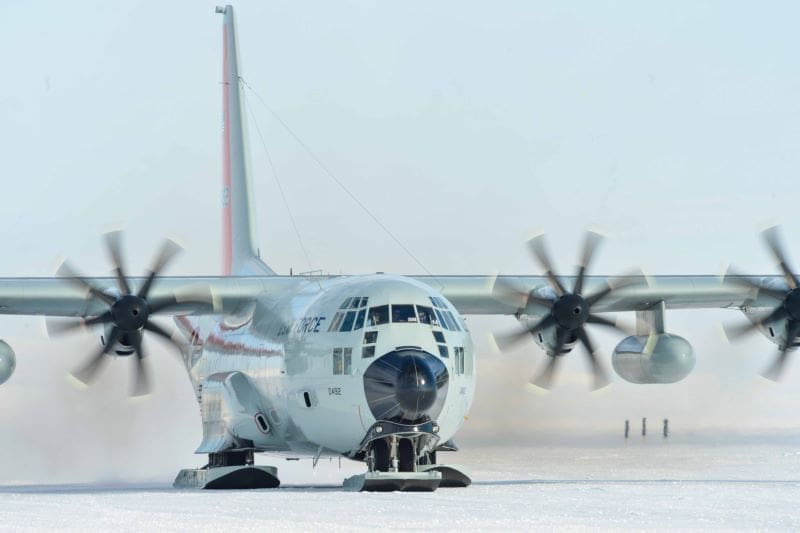
MIL-STD-810 Low Temperature testing (Method 502) is used to evaluate the effects of low temperature on equipment.  This laboratory test method is conducted in a test chamber and can be tailored to replicate the anticipated thermal profiles during storage, transit, and operation.  This test is intended for evaluating the effects of low temperature on equipment and is not intended for replicating the effects of temperature conditions at high altitudes.

Procedure Selection

Defense standard MIL-STD-810 provides three test procedures for Low Temperature; Storage, Operation, and Manipulation. 

  • Procedure I – Storage is used to assess the effects of low temperature on equipment in an induced environment.  An induced environment refers to a man-made condition.  In the case of Low Temperature it would include situations natural airflow is restricted by means of packaging or unconditioned enclosures.  In such cases temperatures may reach levels as low as -60°F (-51°C) for areas such as the interior of Alaska.
  • Procedure II – Operation is used to evaluate the test item’s ability to operate as specified when subjected to low temperatures.  These operating temperatures could be the result of ambient climatic conditions or specific thermal profiles present in an intended operational environment.
  • Procedure III – Manipulation is used to assess how easily equipment might be operated, assembled, maintained, or disassembled when operators are wearing heavy winter clothing.

Determining Test Levels

It is necessary to tailor appropriate test temperature cycle and temperature range values from requirements, measurements, and those derived from the Life Cycle Environmental Profile (LCEP).  Geographic climatic information is available in Part 3 of the standard to assist in value determinations.  MIL-STD-810 uses three categories for defining cold environments:

  • Basic Cold (C1) describes cold temperatures found in most of Europe, coastal areas of Canada, high latitude coastal areas, and the northern 84 states.
  • Cold (C2) describes anticipated cold temperatures in Canada and Alaska (excluding interior areas) Northern Asia and Scandinavia, and high elevations in the mountain ranges of the Alps, and Andes.
  • Severe Cold (C3) includes temperatures found in the interior of Alaska and Canada, Canadian Islands, and Greenland.

When the equipment to be tested is considered to be likely to for worldwide use a value the C3 Severe Cold levels should be used for test.  This temperature would be -60°F (-51°C).

Test Duration

Low Temperature can cause a large number of effects on equipment.  For certain types of equipment the standard calls for extended durations of exposure to cold temperatures to ensure that the material can perform as specified without degradation of integrity.

  • For equipment that is nonhazardous a storage period of four hours is required
  • For munitions and explosives or equipment that have rubber or plastic components seventy-two hours of exposure is required.  This is due the fact that these materials may degrade or deteriorate after long periods of exposure.
  • For equipment that include restrained glass, or ceramics, twenty-four hours of exposure is required.

Test Program Considerations

It is often a requirement for product verification that Low Temperature be performed early in a program to determine if design changes or are required.  However, consideration should also be given to the synergetic effects of multiple environmental stressors.  If concerns exist that the test item might become more brittle it may be advantageous to combine Low Temperature testing with dynamic test such as vibration or shock. 

Detailed Environmental Test Plan Templates

CVG Strategy offers EZ-Test Plan Templates for MIL-STD environmental (climatic/dynamic) and EMI/EMC testing documentation.  Our Detailed Environmental Test Plans (DETP)s are written as specified in MIL-STD-810 Task 405.  They are available for specific applications such as Ground Mobile, Ground Stationary, and Shipboard Controlled, Shipboard Uncontrolled, and Aircraft Military.

These DETPs include appropriate test methods, (such as MIL-STD-810 Low Temperature) addendums for product specific information, test labels for photo identification and data sheets for collection of required data. Profile (LCEP). 

Our Electromagnetic Interference Test Plans are written as specified in MIL-STD-461.  They contain the test methodology, addendums for product specific information, test labels for photo identification and data sheets.  These plans are available for procedures listed in MIL-STD-461 and are also available for MIL-STD-1275, MIL-STD-704, and MIL-STD-1399-300. 

Custom Test Plans are also available for applications not covered in the EZ-Test Plan offerings.  These plans can be written for any number of applications and their relevant standards.

Put CVG Strategy’s Experience to Work for You

Companies of all sizes, from start up to established product developers, face challenges in product test and evaluation.  This can particularly be the case when a product is developed for a new market sector or expanding sales internationally.

Properly tested products prevent costly product recalls, product redesign, and product liability.  They maintain customer satisfaction and keep your company’s reputation in good standing.  Contact CVG Strategy to see how our testing services can assist your engineering team with MIL-STD-810 Low Temperature Testing or any other test and evaluation concern.

MIL-STD-810 Training Classes

CVG Strategy MIL-STD-810 classes will provide you with the ability to develop and conduct an environmental test program.  Our two-day course not only provides you with valuable information about climatic and dynamic test methods but also includes training in the methodology to correctly apply test tailoring relevant to the test item’s expected life cycle. 

This course is available online or onsite.  Ample time is available for questions and comments so that participants are encouraged to keep engaged.  Check here for our online Training Registration Schedule.
High Temperature MIL-STD-810 Method 501

MIL-STD-810 High Temperature
High Temperature MIL-STD-810

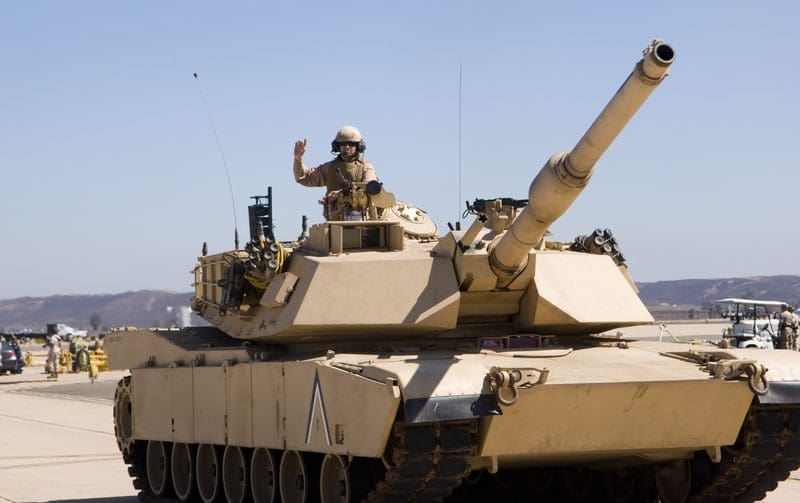
MIL-STD-810 High Temperature testing (Method 501) is used to evaluate the effects of high temperature on equipment.  This laboratory test method is conducted in a chamber and can be tailored to replicate the anticipated thermal profiles during storage, transit, and operation.  This test is intended for evaluating short term effects of heat on equipment and is not intended for replicating the effects of months or years of exposure.

Procedure Selection

Defense standard MIL-STD-810 provides three test procedures for High Temperature; Storage, Operation, and Tactical-Standby to Operational. 

  • Procedure I – Storage is used to assess the effects of high temperature and low humidity on equipment in an induced environment.  An induced environment refers to a man-made condition.  In the case of High Temperature it would include situations natural airflow is restricted by means of packaging or unconditioned enclosures.  In such cases temperatures may reach levels as high as 160°F (71°C).
  • Procedure II – Operation is used to evaluate the test item’s ability to operate as specified when subjected to high temperatures.  These operating temperatures could be the result of ambient climatic conditions or specific thermal profiles present in an intended operational environment, such as an engine compartment.
  • Procedure III – Tactical-Standby to Operational is used where equipment may be subjected to temperature exposures in enclosed environments such as cockpits and then be immediately required to operate.  In such cases it often recommended to determine maximum temperatures induced from solar radiation.  This can be accomplished by measuring temperatures on the intended platform or conduction Solar Radiation (Sunshine) testing prior to High Temperature. 

Determining Test Levels

It is necessary to tailor appropriate test temperature cycle and temperature range values from requirements, measurements, and those derived from the Life Cycle Environmental Profile (LCEP).  Geographic climatic information is available in Part 3 of the standard to assist in value determinations.  Additionally, twenty-four hour high temperature cycles for both ambient and induced environments are available in the method that include typical relative humidity levels.

As with most MIL-STD-810 methods, measured data when available is preferred for determining test values.  This is particularly the case for environments such as engine compartments or in situations in which solar radiation may be a factor in determining maximum temperatures.

Test Program Considerations

It is often a requirement for product verification that High Temperature be performed early in a program to determine if design changes or are required.  However, consideration should also be given to the effects of High Temperature on the Unit Under Test’s (UUT). 

High Temperature can cause lasting effects that could compromise a products ability to function in other environmental tests.  An example of which could be the failure of an adhesive that could cause failures in dynamic tests.  When this may present a significant risk, it is appropriate to evaluate where this method should line up in the over all test plan’s sequence.

Detailed Environmental Test Plan Templates

CVG Strategy offers EZ Test Plan Templates for MIL-STD environmental (climatic/dynamic) and EMI/EMC testing documentation.  Our Detailed Environmental Test Plans (DETP)s are written as specified in MIL-STD-810 Task 405.  They are available for specific applications such as Ground Mobile, Ground Stationary, and Shipboard Controlled, Shipboard Uncontrolled, and Aircraft Military.

These DETPs include appropriate test methods, (such as MIL-STD-810 Low Pressure) addendums for product specific information, test labels for photo identification and data sheets for collection of required data. Profile (LCEP). 

Our Electromagnetic Interference Test Plans are written as specified in MIL-STD-461.  They contain the test methodology, addendums for product specific information, test labels for photo identification and data sheets.  These plans are available for procedures listed in MIL-STD-461 and are also available for MIL-STD-1275, MIL-STD-704, and MIL-STD-1399-300. 

Custom Test Plans are also available for applications not covered in the EZ Test Plan offerings.  These plans can be written for any number of applications and their relevant standards.

Put CVG Strategy’s Experience to Work for You

Companies of all sizes, from start up to established product developers, face challenges in product test and evaluation.  This can particularly be the case when a product is developed for a new market sector or expanding sales internationally.

Properly tested products prevent costly product recalls, product redesign, and product liability.  They maintain customer satisfaction and keep your company’s reputation in good standing.  Contact CVG Strategy to see how our testing services can assist your engineering team with MIL-STD-810 High Temperature Testing or any other test and evaluation concern.

MIL-STD-810 Training Classes

CVG Strategy MIL-STD-810 classes will provide you with the ability to develop and conduct an environmental test program.  Our two-day course not only provides you with valuable information about climatic and dynamic test methods but also includes training in the methodology to correctly apply test tailoring relevant to the test item’s expected life cycle. 

This course is available online or onsite.  Ample time is available for questions and comments so that participants are encouraged to keep engaged.  Check here for our online Training Registration Schedule.
MIL-STD-810 Low Pressure (Altitude) Testing

mil-std-810 low pressure

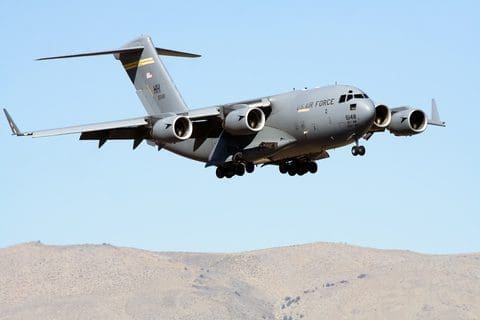
MIL-STD-810 Low Pressure (Altitude) testing is performed to evaluate equipment’s ability withstand exposures to low pressures.  These pressures may occur while the equipment is in storage, logistic transport, tactical transport, or actual operation.  This method (500.6) is one of twenty-nine laboratory environmental tests in the standard.

Low Pressure (Altitude) Procedures

The Low Pressure method is comprised of four testing procedures.  Dependent on requirements and the Life Cycle Environmental Profile (LCEP) of the equipment to be tested, one or more procedures can be performed.  

Procedure I – Storage/Air Transportation is in intended for equipment that will be transported by air or stored at high altitudes.  For ground transport and storage, 15,000 ft. (4,572m) is the accepted maximum standard test altitude.  This same value is accepted as a standard pressure for pressurized aircraft altitude testing.

Procedure II – Operation/Air Carriage is to be performed to evaluate equipment in operational modes at low pressure.  The equipment is placed in an environmental chamber and brought to the desired pressure and temperature at which point tests are performed to ensure that the Unit Under Test (UUT) can perform as designed in all modes of operation.

Procedure III – Rapid Decompression is used to determine if rapid decreases could result in a rupture or other malfunction of the UUT that would cause potential harm to the aircraft in which it is being transported in or personnel in the area. 

This test procedure starts with an initial chamber pressure of 8,000 ft. (2,438m) (10.9 psia or 75.2 kPa) and a final chamber pressure of 40,000 ft. (12,192m) (2.73 psia or 18.8 kPa).  The decompression between these two pressure levels is to be accomplished in not more than 15 seconds.

Procedure IV – Explosive Decompression is to be performed as Procedure III except that decompression time is 0.1 seconds.

MIL-STD-810 Requirements for Tailoring

Proper test and evaluation as defined in MIL-STD-810 Low Pressure (Altitude) requires tailoring.  This tailoring should consider a complete Whole Life Assessment of environmental stressors likely to be encountered by the materiel in question.  Obviously, these stresses will vary greatly dependent on the platform for which it is designed.  Equipment designed for the exterior of an aircraft will have very different LCEP than equipment designed for a ground vehicle engine compartment.

Once this study has been completed, appropriate test methods, procedure selections, and test parameters can be established and documented in a Test and Evaluation Master Plan (TEMP).  These parameters can then be used in the creation of a Detailed Environmental Test Plan (DETP).  The DETP should also contain functional and operational tests that are to be performed before, during, and after chamber testing.  

Detailed Environmental Test Plan Templates

CVG Strategy offers EZ Test Plan Templates for MIL-STD environmental (climatic/dynamic) and EMI/EMC test documentation.  Our Detailed Environmental Test Plans (DETP)s are written as specified in Department of Defense standard MIL-STD-810 Task 405.  They are available for specific applications such as Ground Mobile, Ground Stationary, and Shipboard Controlled, Shipboard Uncontrolled, and Aircraft Military.

These DETPs include appropriate methods, such as MIL-STD-810 Low Pressure (Altitude) Method 500 addendums for product specific information, test labels for photo identification and data sheets for collection of required data. Profile (LCEP). 

Our Electromagnetic Interference Test Plans are written as specified in MIL-STD-461.  They contain the test methodology, addendums for product specific information, test labels for photo identification and data sheets.  These plans are available for procedures listed in MIL-STD-461 and are also available for MIL-STD-1275, MIL-STD-704, and MIL-STD-1399-300. 

Custom Test Plans are also available for applications not covered in the EZ Test Plan offerings.  These plans can be written for any number of applications and their relevant standards.

MIL-STD-810 Training Classes

CVG Strategy MIL-STD-810 classes will provide you with the ability to develop and conduct an environmental test program.  Our two-day course not only provides you with valuable information about climatic and dynamic test methods but also includes training in the methodology to correctly apply test tailoring relevant to the test item’s expected life cycle. 

This course is available online or onsite.  Ample time is available for questions and comments so that participants are encouraged to keep engaged.  Check here for our online Training Registration Schedule.

Sand and Dust MIL-STD-810 Method 510

Sand and Dust MIL-STD-810

Sand and Dust MIL-STD-810, Method 510 testing is used to evaluate equipment’s ability to withstand exposure to blowing sand and dust.  This test is to be performed in environmental chambers and replicates natural exposures expected in hot-dry regions of the world.

The standard defines dust as particles with a diameter less than 150 μm.  Sand is defined as particles with a diameter between 150 to 850 μm.  The standard further defines the prescribed composition of these particles to be used in the procedures.

Effects of Exposure to Sand and Dust

Sand and Dust can cause numerous effects on equipment that can result in serious degradation of performance or complete failure.  Abrasion, erosion, and penetration of seals can occur.  Effects caused by the interference of moving parts as particles enter into crevices, bearings, and joints can render equipment ineffective or hinder use.  Additionally, when particles obstruct openings and vents, they can cause overheating.

Recent Revisions to This Test Method

The Sand and Dust test method was completely rewritten in Revision H, which was released in 2019.  Changes were made to ensure that a more realistic distribution of particles in test chambers during a test.  These changes led to the redesign of chambers in many test facilities and resulted in dust chambers being reduced in size.  It is therefore important to make certain that chambers are available if you are testing larger equipment.

Revisions in MIL-STD-810 usually occur to create more realistic test environments using the latest available technology.  In most cases there are few reasons to test to older revisions of the standard.  This would especially be the case for this particular method.

Test Procedures for Method 510

There are two procedures in Method 510, Procedure I – Blowing Dust, and Procedure II – Blowing Sand:  

Procedure I – Blowing Dust

Blowing Dust is conducted using specific air velocities.  When measured data is not available the following representative values are to be used:  An air velocity of 300 ±200 ft/min (1.5 ±1 m/s) is to be used to maintain test temperature conditions, and an air velocity of 1750 ±250 ft/min (8.9 ±1.3 m/s) is to be used to replicate desert winds.  Typically, these wind speeds are to be uniformly across the area of the test item.

Temperatures should reflect the intended environments expected to be encountered in the equipment’s life cycle.  Normally, this would include Hot Dry (A1) temperatures that would be found in the deserts of Asia, Africa, Australia, and North America.  For ambient exposures, this would be 120 °F (49 °C), although higher temperatures can be employed to account for solar loading on equipment.

As moisture in the test chamber can result in caking of the dust, it is important to control the levels of relative humidity (RH).  For the blowing dust procedure, the RH should not exceed 30 percent.

As previously mentioned, dust composition is specified in the standard.  Normally, red China clay or silica flour is used, unless otherwise specified.  Testing should be conducted for at least 6 hours at ambient temperature and 6 hours at the specified high temperature. 

The test item may be rotated during testing to ensure that all faces have equal exposure.  If necessary, operational tests should be conducted.  These should be performed for at least 10-minute durations.

Procedure II – Blowing Sand

Blowing Sand should, unless otherwise specified, use the same temperatures as used in Blowing Dust.  Generally, a wind velocity of 40 mph (18 m/s) or higher is used for testing.  As the sand used in testing should have an angular composition, the reuse of sand from previous tests is not allowed, as the impact of particles will result in increased roundness of sand particles.

This test should be performed for a minimum of 90 minutes per side of equipment normally vulnerable to exposure.  Required operational testing should be considered when writing a test plan.  

Special Considerations for Sand and Dust Testing

Test Sequencing

Sand and Dust MIL-STD-810 Method 510 testing causes abrasion and will produce a coating of dust on test items.  This could influence the results of testing performed after this method for Humidity, Solar Radiation, Fungus, Salt Fog/Corrosive Environments, and Acidic Environments.  Care should be taken when developing the Test and Evaluation Master Plan.

Electrostatic Energy

High levels of electrostatic electricity can buildup due to the combination of dry air with moving particles.  It is important to consider adequate grounding schemes to prevent discharges that could damage the test unit.

Detailed Environmental Test Plan Templates

CVG Strategy offers EZ-Test Plan Templates for MIL-STD environmental (climatic/dynamic) and EMI/EMC testing documentation.  Our Detailed Environmental Test Plans (DETP)s are written as specified in MIL-STD-810 Task 405.  They are available for specific applications such as Ground MobileGround Stationary, and Shipboard Controlled, Shipboard Uncontrolled, and Aircraft Military.

These DETPs include appropriate test methods, (such as Sand and Dust MIL-STD-810 Method 510) addendums for product specific information, test labels for photo identification and data sheets for collection of required data. Profile (LCEP). 

Our Electromagnetic Interference Test Plans are written as specified by the Department of Defense.  They contain the test methodology, addendums for product specific information, test labels for photo identification and data sheets.  These plans are available for procedures listed in MIL-STD-461 and are also available for MIL-STD-1275, MIL-STD-704, and MIL-STD-1399-300. 

Custom Test Plans are also available for applications not covered in the EZ-Test Plan offerings.  These plans can be written for any number of applications and their relevant standards.

Put CVG Strategy’s Experience to Work for You

Companies of all sizes, from start up to established product developers, face challenges in product test and evaluation.  This can particularly be the case when a product is developed for a new market sector or expanding sales internationally.

Properly tested products prevent costly product recalls, product redesign, and product liability.  They maintain customer satisfaction and keep your company’s reputation in good standing.  Contact CVG Strategy to see how our testing services can assist your engineering team with Sand and Dust MIL-STD-810 Method 510, or any other test and evaluation concern.

MIL-STD-810 Training Classes

CVG Strategy MIL-STD-810 classes will provide you with the ability to develop and conduct an environmental test program.  Our two-day course not only provides you with valuable information about climatic and dynamic test methods but also includes training in the methodology to correctly apply test tailoring relevant to the test item’s expected life cycle. 

This course is available online or onsite.  Ample time is available for questions and comments so that participants are encouraged to keep engaged.  Check here for our online Training Registration Schedule.
MIL-STD-810 Method 528 Mech. Vibration of Shipboard Equip.

MIL-STD-810 Method 528
Photo By: Navy Petty Officer 2nd Class Keith Nowak

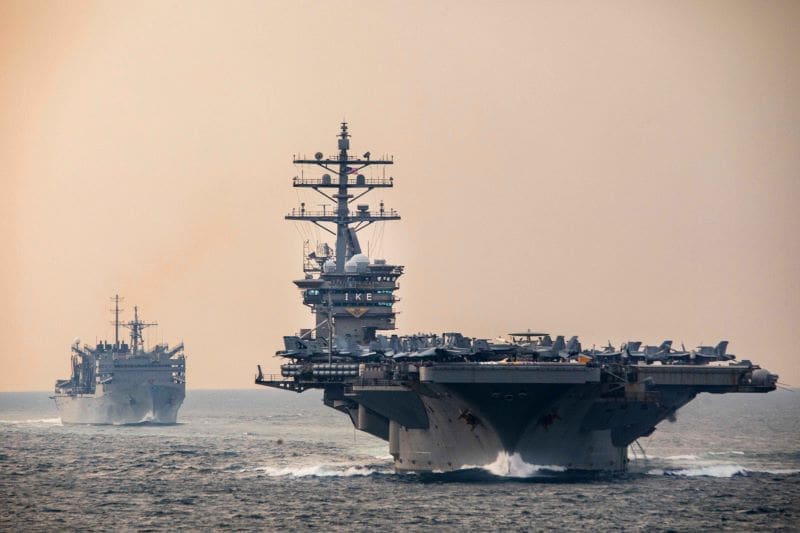
Mechanical Vibrations of Shipboard Equipment, MIL-STD-810, Method 528 is performed to meet U.S. Navy requirements for environmental and internally excited vibration of equipment designed for installation aboard navy ships.  These vibration tests were derived from MIL-STD-167 and was added along with lessons learned to MIL-STD-810 in Revision G.

As with other testing for Naval requirements, this testing is normally performed as designated in the method.  Any tailoring of test procedures must be approved by the the acceptance authority.  The term tailoring, as used in MIL-STD-810, is the process of selecting and altering design test characteristics, and tolerances, to account for environmental stresses expected in the life cycle of the equipment to be evaluated.  

Procedures for Shipboard Vibration

Procedure I (Type I) – Environmental Vibration

Procedure I is used to simulate exposure to vibration caused by conventional shafted propeller propulsion.  Testing can be tailored for shipboard equipment subjected to nonconventional propulsor types such as waterjet or podded propulsors.  

For this procedure, the Unit Under Test (UUT) is to be secured to the test machine using the same points or areas of attachment as intended for securing it shipboard.  The UUT should be mounted in the orientation of intended use.  Equipment must be tested in its operational modes.

Testing is performed in three phases.  The first phase is an exploratory test to determine the presence of response prominences or resonances in the UUT.  Testing may be performed in 1 Hz intervals for the range of 4 Hz to 33 Hz or swept frequency of the same range if the rate of sweep does not exceed. 0.067 Hz/second. 

This testing is performed on three axis and any prominences are to be recorded.  These prominences will be considered to as frequencies  for the third phase of testing, endurance.

The second phase of testing for procedure I is a variable frequency test in which the UUT is subjected to vibration of increased amplitudes for five minutes at each integral frequency.  Special consideration for frequency range is provided for equipment intended for a single type of ship.  As with the previous testing, prominences are recorded for consideration for endurance testing.

Endurance testing is then performed for the most prominent resonances noted in previous testing.  At a minimum this testing is to have a total time of 2 hours.  Test duration is based on the number of prominences. 

If no prominences were noted the test is to be performed at 33 Hz or the highest specified frequency.  Increased vibratory displacements are required for mast mounted equipment.

Procedure II (Type II) – Internally Excited Vibration

MIL-STD-810 Method 528, Procedure II is applicable to rotating machinery and is performed to minimize vibrations caused by the equipment.  It is also performed to reduce bearing wear and noise.  The testing places limitations on the vibration output of the equipment and the deflection of rotors.  This testing is important to prevent mechanical failures of adjacent structures and equipment and prevent health effects of Whole Body Vibration (WBV).

Detailed Environmental Test Plan Templates

CVG Strategy offers EZ Test Plan Templates for MIL-STD environmental (climatic/dynamic) and EMI/EMC test documentation.  Our Detailed Environmental Test Plans (DETP)s are written as specified in Department of Defense standard MIL-STD-810 Task 405.  They are available for specific applications such as Ground Mobile, Ground Stationary, and Shipboard Controlled, Shipboard Uncontrolled, and Aircraft Military.

These DETPs include appropriate methods, (such as Mechanical Vibrations of Shipboard Equipment MIL-STD-810 Method 528) addendums for product specific information, test labels for photo identification and data sheets for collection of required data. Profile (LCEP). 

Our Electromagnetic Interference Test Plans are written as specified in MIL-STD-461.  They contain the test methodology, addendums for product specific information, test labels for photo identification and data sheets.  These plans are available for procedures listed in MIL-STD-461 and are also available for MIL-STD-1275, MIL-STD-704, and MIL-STD-1399-300. 

Custom Test Plans are also available for applications not covered in the EZ Test Plan offerings.  These plans can be written for any number of applications and their relevant standards.

MIL-STD-810 Training Classes

CVG Strategy MIL-STD-810 classes will provide you with the ability to develop and conduct an environmental test program.  Our two-day course not only provides you with valuable information about climatic and dynamic test methods but also includes training in the methodology to correctly apply test tailoring relevant to the test item’s expected life cycle. 

This course is available online or onsite.  Ample time is available for questions and comments so that participants are encouraged to keep engaged.  Check here for our online Training Registration Schedule.

Rail Impact MIL-STD-810 Method 526

Rail Impact MIL-STD-810
Photo by Charles Haacker

Rail Impact MIL-STD-810 Method 526 replicates railcar impact conditions to evaluate tie down systems and tie down procedures used in the transport of equipment.  This test is not a laboratory test but is performed actual rail cars involved in the impacts during coupling.  It normally involves car impact testing at speeds under 8 mph (12.9 km/h). 

The rail impact method is based on requirements for commercial railroad car transport as defined by the Association of American Railroads (AAR).  This test methodology is not intended to simulate railcar crash conditions.  It is also not applicable to small individually packaged equipment that would would be palletized.  Special consideration and reviews are required for explosives and ammunition by appropriate authorities.

Rail Impact MIL- STD- 810 and Test Tailoring

Unlike most methods in MILSTD-810, this method is not generally tailorable except in cases requiring extraordinary attention.  Any and all tailoring must have review and approval of the test procedure by the director of the The Military Surface Deployment and Distribution Command (SDDC). 

Risk analysis should be performed when considering the sequence of testing for Rail Impact.  In cases where a high risk of material damage is expected this test should be performed early in the test program if feasible.  Consideration should be given to any effects these shocks could have on the electromagnetic behavior of the test item.

Methods of simulation may be used when analysis of the test item’s ability to withstand rail impact shocks is desired.  Shock samples have been computed for use in design specifications.  These may be uses in dynamic models for these simulations.

When evaluating test results, a number of possible effects should be considered during post test evaluations.  These include the loosing of restraints, shifting of material on railcar, equipment failure, fuel spills, any created hazards, and structural failures.

Test Setup for Rail Impact 

Rail Impact MIL-STD-810 is conducted using actual railcars in motion.  A test railcar is used to carry the test item which is secured on the car with chain tiedowns.  The test railcar is moved using a railcar mover or locomotive. 

If a locomotive or railcar mover is not available, an inclined section of track may be used.  The minimum length of track required is 200 ft. (61 m).  

When testing is performed, the test railcar is accelerated to specified speeds to impact a buffer car or cars.  The minimum required weight of the buffer car(s) is 250,000 lb. (113,400 kg).  

Loads are to representative of the intended test item.  Wheeled vehicles are to have tires inflated to manufacturer highway recommended pressures.  Fuel tanks are to be at filled to 75% of capacity.  Vehicles may be placed in lowered transport modes when equipped with variable height or pneumatic suspensions with manually inserted suspension stops installed.  

When the test item is a trailer, it is to be tested in both a connected and disconnected configuration with its prime mover.

Regardless of vehicle type, the test item should be fully loaded at its maximum gross weight unless it is a vehicle used for material handling such as a dump truck or wrecker.  Vehicles are to be in worse case configurations with parking brakes disengaged and transmissions in neutral.

Test Procedure

The test item is to be subjected to four impacts during testing.  These are to be conducted at speeds of 4, 6, and 8 mph (6.4, 9.7, and 12.9 km/h) respectively.  The fourth impact is to be performed is performed at the top stated speed with the test item in the opposite direction. 

Once the impacts have been performed the item is inspected for any loosening or failure of tie down mechanisms, shifting of the test item on the railcar, structural failures, fuel spills, or damage to the tested equipment.

Detailed Environmental Test Plan Templates

CVG Strategy offers EZ Test Plan Templates for MIL-STD environmental (climatic/dynamic) and EMI/EMC test documentation.  Our Detailed Environmental Test Plans (DETP)s are written as specified in Department of Defense standard MIL-STD-810 Task 405.  They are available for specific applications such as Ground Mobile, Ground Stationary, and Shipboard Controlled, Shipboard Uncontrolled, and Aircraft Military.

These DETPs include appropriate methods, (such as Rail Impact MIL-STD-810 Method 526) addendums for product specific information, test labels for photo identification and data sheets for collection of required data. Profile (LCEP). 

Our Electromagnetic Interference Test Plans are written as specified in MIL-STD-461.  They contain the test methodology, addendums for product specific information, test labels for photo identification and data sheets.  These plans are available for procedures listed in MIL-STD-461 and are also available for MIL-STD-1275, MIL-STD-704, and MIL-STD-1399-300. 

Custom Test Plans are also available for applications not covered in the EZ Test Plan offerings.  These plans can be written for any number of applications and their relevant standards.

MIL-STD-810 Training Classes

CVG Strategy MIL-STD-810 classes will provide you with the ability to develop and conduct an environmental test program.  Our two-day course not only provides you with valuable information about climatic and dynamic test methods but also includes training in the methodology to correctly apply test tailoring relevant to the test item’s expected life cycle. 

This course is available online or onsite.  Ample time is available for questions and comments so that participants are encouraged to keep engaged.  Check here for our online Training Registration Schedule.

Common Cybersecurity Weaknesses for CUI Protection

Common Cybersecurity Weaknesses for CUI
Photo by Tima Miroshnichenko

Recent reports from the Department of Defense (DoD) outline common cybersecurity weaknesses for Controlled Unclassified Information (CUI) protection by contractors.  CUI is information that is possessed or created for the U.S. government that, by law, requires dissemination controls and safeguarding.  These required security controls are specified in NIST SP 800-171.  When prospective contractors respond to the DoD about their cybersecurity capabilities they must attest that they comply with security requirements or will comply in the future.  

The five audit reports, submitted from 2018 to 2023 contained assessments of 29 DoD contractors that are currently providing defense products and services.  These reports are being used in the investigations of contractors alleged to have knowingly misrepresented their compliance to NIST SP 800-171.  These investigations are being conducted by the United States Department of Justice (DoJ).

The reports from the DoD Office of Inspector General (OIG) outline weaknesses identified in federal government contractor officials verification processes that ensure contractor compliance with NIST SP 800-171 requirements.  It also outlines inconsistencies in DoD contractor’s implementation of these cybersecurity requirements.

Inconsistencies in Contractor Implementation of Required Controls

Multifactor Authentication or Strong Passwords

It was noted that contractors audited in the assessments had insufficient enforcement of the use of strong passwords.  Additionally, these same organizations often failed to implement multifactor identification.  Multifactor authentication is a requirement for accessing non-privileged network and system accounts.  Password complexity enforcement is a requirement where multifactor authentication where single factor authentication is in use.

System Activity and User Activity Reports

The report noted multiple failures of organizations to conduct regular generation and review of system activity and user activity reports.  Regular performance of this function allows for identification of unauthorized access attempts that could lead to the breach of sensitive information.  Information gained from this activity can also be used as forensic evidence when investigating malicious events.

Disabling Inactive User Accounts

Contractors assessed failed to disable user accounts after extended periods of inactivity in half of the assessments conducted.  The NIST SP 800-171 requirement is used to prevent outdated or unused accounts from being used as penetration points for gaining access into an information system.

Physical Security

In a majority of the assessments conducted, it was discovered that contractors failed to implement sufficient physical security controls for the monitoring of facilities.  These controls include devices such as video cameras that can allow organizations to identify and respond to security events.

Network and System Vulnerabilities

NIST SP 800-171 has requirements for conduct regular scans for network and system vulnerabilities.  Vulnerabilities that are discovered should be documented and addressed in an organizations Plans of Actions and Milestones (PoAM) so that network and system weaknesses can be mitigated.

Scanning for Viruses and Malicious Code

This basic cybersecurity activity was not performed on networks and systems in half of the assessed organizations.  NIST SP 800-171 has requirements for periodic scans of networks and systems as well as real-time scans of external sourced files to detect malicious code.  These requirements include updating virus definitions and full-disk scans.

Weaknesses in DoD Verification Processes

The report noted areas in which DoD contracting officials had insufficient verification processes for ensuring contractor compliance to NIST SP 800-171 requirements.  The areas corresponded with the reported inconsistencies of contractor implementation with the addition of the failure to recognize deficiencies in the protection of CUI on removable media.

The control of removable media on system components requirements are designed to restrict access to media and the use of certain types of media on systems.  This would include the restriction or prohibition of flash drives and external hard disk drives.  Applicable controls would include excluding use to devices provided or approved by the organization. 

The requirement is designed to ensure that only authorized personnel can access and transfer data using removable media.  It further ensures that any data transferred is protected from unauthorized access or disclosure.

Results of the Reports

As a result of the report, 116 recommendations were given to divisions within the Department of Defense.  These recommendations are being instituted to improve assessments conducted by DoD contract officials.  Additionally, these reports will focus contract officials attention to the reported deficiencies in future contractor assessments.  It is therefore, recommended that organizations seeking contracts pay particular attention to their compliance status in these areas.

CVG Strategy Information Security Management System Consultants

This DoD report on common cybersecurity weaknesses for CUI protection will be used by contracting officers to assess contractor performance for future contracts and grants.  Therefore it is in the best interest of organizations involved in defense contracts to ensure that their information security programs address these issues.

To assist businesses to meet the challenges in adopting CMMC 2.0 standards, CVG Strategy has developed an approach that combines the requirements of CMMC compliance with the ISO 27001 information security management system.  This provides a coherent methodology for implementing and maintaining essential cybersecurity for businesses of any size.

We can help you meet your information security management system goals.  CVG Strategy QMS experts are Exemplar Global Certified Lead Auditors.  We can provide the training required to understand and engage in a ISMS and make it meet desired objectives. This process includes defining the context of your organization, creation of internal auditing processes and much more. 

Identify Areas With CUI with CVG Strategy Signs

CVG Strategy provides signs to identify areas containing CUI and export controlled items. These signs should be posted at all facility entrances where products are being produced or services are being performed that are under the control of the U.S. Department of State Directorate of Defense Trade Controls (DDTC) and are subject to the International Traffic in Arms Regulations per title 22, Code of Federal Regulations (CFR), Parts 120-130.

Freeze-Thaw MIL-STD-810 Method 524

Freeze-Thaw MIL-STD-810
Photo by Pixabay

Freeze-Thaw MIL-STD-810 Method 524 is used to evaluate equipment’s ability to withstand transitions in temperatures through the freeze point in the midst of ambient temperatures and when transitioned from environments of varying temperatures.  Effects of exposures to these environmental conditions include: binding or distortion of parts, failure of seals, adhesives, and materials, and fogging of optical equipment during the freeze-thaw phenomena.

Test Procedures for Freeze-Thaw

Three laboratory test procedures are available in the test standard for this MIL-STD-810 test method.  All are to be conducted in a laboratory test facility.

  • Procedure I – Diurnal Cycling Effects.  This procedure simulates exposures that vary from slightly above and below the freeze point.  This test simulates night time freezing and daytime warming.  
  • Procedure II – Fogging.  This procedure is intended for equipment that is designed to not fog or has built in capabilities to de-fog optical components.  Typical applications would include aircraft stores, such as missiles, moving from a cold to warm environment.
  • Procedure III – Rapid Temperature Change.  This procedure simulates equipment being moved from a warm to cold environment and then being returned to warm causing condensation to occur on the equipment.

Test Parameters

Temperatures ranges for testing normally cycle between 41 °F and 14 °F (+5 °C and -10 °C) for diurnal cycling and 14 °F (-10 °C).  These temperatures can be varied as required to effectively simulate the desired environmental effects. 

As with other MIL-STD-810 methods, the use of appropriately pure water is important for representative testing.  Chemicals such as calcium carbonate, which are often found in water supplies can clog nozzles used in providing water vapor or sprays.  Guidance for water purity can be found in Part 1 paragraph 5.16 of the standard.

Performance of Procedures II an III generally require the utilization of two environmental chambers to effect sudden temperature changes.  Temperature changes within a chamber should not exceed 5.4 °F (3 °C) per minute to prevent thermal shock.

For Procedure I – Diurnal Cycling the minimum required number of freeze-thaw cycles is twenty.  For Procedures II and III the minimum number of cycles is three.  Normally the Unit Under Test (UUT) should be held at each test temperature for a minimum of one hour.

Detailed Environmental Test Plan Templates

CVG Strategy offers EZ Test Plan Templates for MIL-STD environmental (climatic/dynamic) and EMI/EMC test documentation.  Our Detailed Environmental Test Plans (DETP)s are written as specified in Department of Defense standard MIL-STD-810 Task 405.  They are available for specific applications such as Ground Mobile, Ground Stationary, and Shipboard Controlled, Shipboard Uncontrolled, and Aircraft Military.

These DETPs include appropriate methods, (such as Freeze-Thaw MIL-STD-810 Method 524) addendums for product specific information, test labels for photo identification and data sheets for collection of required data. Profile (LCEP). 

Our Electromagnetic Interference Test Plans are written as specified in MIL-STD-461.  They contain the test methodology, addendums for product specific information, test labels for photo identification and data sheets.  These plans are available for procedures listed in MIL-STD-461 and are also available for MIL-STD-1275, MIL-STD-704, and MIL-STD-1399-300. 

Custom Test Plans are also available for applications not covered in the EZ Test Plan offerings.  These plans can be written for any number of applications and their relevant standards.

MIL-STD-810 Training Classes

CVG Strategy MIL-STD-810 classes will provide you with the ability to develop and conduct an environmental test program.  Our two-day course not only provides you with valuable information about climatic and dynamic test methods but also includes training in the methodology to correctly apply test tailoring relevant to the test item’s expected life cycle. 

This course is available online or onsite.  Ample time is available for questions and comments so that participants are encouraged to keep engaged.  Check here for our online Training Registration Schedule.

Vibro-Acoustic/Temperature MIL-STD-810 Method 523

Vibro-Acoustic/Temperature MIL-STD-810
Photo By: Air Force Staff Sgt. Jessi Roth

Vibro-Acoustic/Temperature MIL-STD-810 Method 523.4 testing is performed to evaluate the effects of acoustic noise, vibration, and temperature on aircraft externally carried stores during flight.  Aircraft stores refer to devices that are mounted on aircraft suspension and release equipment such as missiles, rockets, or bombs.

This MIL-STD-810 testing method can be used to:

  • Reveal and correct design deficiencies 
  • Demonstrate reliability
  • Estimate Mean Time Between Failures (MTBF)
  • Determine relative reliability for source comparison

Method 523 an Exception in MIL-STD-810

Vibro-Acoustic/Temperature varies in purpose from most methods in this military standard.  The standard, in fact, clearly states that this testing is not intended for environmental design qualification.  Most methods in the standard are limited in purpose for Developmental Test and Evaluation of the effects of environmental conditions expected in the service life of a test item, but Method 523 includes MTBF, manufacturing testing, lot acceptance, and source comparison evaluation.  

This testing therefore is not intended to replace design qualification of other methods such as:

  • Test method 501.6 High Temperature;
  • Test Method 502.6 Low Temperature;
  • Test Method 503.6 Temperature Shock; 
  • Test Method 514.8 Vibration or,
  • Test Method 515.5 Acoustic Noise

Implementation of Additional Environmental Stresses

The utilization of stressors beyond Vibration, Acoustic Vibration, and Temperature is allowed in this method in cases where those stresses are expected to regularly occur.  These stressors include electrical supply variations such as low and high voltage, voltage spikes, and power ripple.  Relevant environmental stresses may include humidity, shock, and altitude.

Detailed Environmental Test Plan Templates

CVG Strategy offers EZ Test Plan Templates for MIL-STD environmental (climatic/dynamic) and EMI/EMC test documentation.  Our Detailed Environmental Test Plans (DETP)s are written as specified in Department of Defense standard MIL-STD-810 Task 405.  They are available for specific applications such as Ground Mobile, Ground Stationary, and Shipboard Controlled, Shipboard Uncontrolled, and Aircraft Military.

These DETPs include appropriate methods, (such as Vibro-Acoustic/Temperature MIL-STD-810 Method 523) addendums for product specific information, test labels for photo identification and data sheets for collection of required data. Profile (LCEP). 

Our Electromagnetic Interference Test Plans are written as specified in MIL-STD-461.  They contain the test methodology, addendums for product specific information, test labels for photo identification and data sheets.  These plans are available for procedures listed in MIL-STD-461 and are also available for MIL-STD-1275, MIL-STD-704, and MIL-STD-1399-300. 

Custom Test Plans are also available for applications not covered in the EZ Test Plan offerings.  These plans can be written for any number of applications and their relevant standards.

MIL-STD-810 Training Classes

CVG Strategy MIL-STD-810 classes will provide you with the ability to develop and conduct an environmental test program.  Our two-day course not only provides you with valuable information about climatic and dynamic test methods but also includes training in the methodology to correctly apply test tailoring relevant to the test item’s expected life cycle. 

This course is available online or onsite.  Ample time is available for questions and comments so that participants are encouraged to keep engaged.  Check here for our online Training Registration Schedule.

Ballistic Shock MIL-STD-810 Method 522

Ballistic Shock MIL-STD-8140 Method 522
Photo By: Army Sgt. Joaquin Vasquez-Duran

Ballistic Shock MIL-STD-810 Method 522 evaluates equipment designed for armored combat vehicles’ ability to withstand the shock associated with non-perforating large caliber munition impact or blast.  This testing can be used to provide a degree of confidence in the the equipment’s ability to function after such a shock, or be used to evaluate shock mitigation designs and mounting configurations.

Ballistic Shock Characteristics

Ballistic shock characteristics include high acceleration from 300 to 1,000,000 g’s within a short duration time (generally under 180 msec).  These mechanical shocks have a very wide bandwidth extending from 10 Hz to 1 MHz and are highly random in nature.  It should be noted that effects of the shock are highly dependent on the distance from the actual impact as high frequencies will be filtered by the structure of the vehicle.

Ballistic shock can have a number of adverse effects on electrical, mechanical, and electronic devices.  Aside from complete mechanical failure of the test item, ballistic shock can cause integrated circuits failures, printed circuit card damage,  and electronic connector failures.  Failures can also occur due to fractures in crystals, ceramics, epoxies, or glass envelopes.  Additionally, intermittent, functional failures can also occur due to relay chatter and piezo electric effects of high frequency shock on electronics.  

Procedures for Shock Testing

There are six procedures available for Ballistic Shock testing:

  • Procedure I – Ballistic and Turret (BH&T), Full Spectrum Ballistic Shock Qualification incorporates the firing of projectiles on an armored hull or turret.  
  • Procedure II – Large Scale Ballistic Shock Simulator (LSBSS) uses a shock machine to produce a shock spectrum from 10 Hz to 100 kHz.  It can be used for items weighing up to 1,100 lbs. (500 kg).
  • Procedure III – Limited Spectrum, Light Weight Shock Machine (LWSM) is for components weighing less than 250 lb. (113.6 kg) and items that are shock mounted to filter frequencies above 3 kHz.
  • Procedure IV – Limited Spectrum, Mechanical Shock Simulator for components from 1 to 4 lb. (0.5 to 1.8 kg)  Machines for this testing can produce Shock Response Spectrums (SRS) up to 10 kHz.
  • Procedure V – Limited Spectrum, Medium Weight Shock Machine (MWSM)is available for components weighing less than 5,000 lb. (2273 kg) that are not sensitive to frequencies above 10 kHz.
  • Procedure VI – Drop Table testing is acceptable for the majority of ballistic shock qualification testing.  Although drop testing over-tests at low frequencies and under-tests at high frequency the reduction of cost in testing makes it an attractive alternative.

Detailed Environmental Test Plan Templates

CVG Strategy offers EZ Test Plan Templates for MIL-STD environmental (climatic/dynamic) and EMI/EMC test documentation.  Our Detailed Environmental Test Plans (DETP)s are written as specified in Department of Defense standard MIL-STD-810 Task 405.  They are available for specific applications such as Ground Mobile, Ground Stationary, and Shipboard Controlled, Shipboard Uncontrolled, and Aircraft Military.

These DETPs include appropriate methods, (such as Ballistic Shock MIL-STD-810 Method 522) addendums for product specific information, test labels for photo identification and data sheets for collection of required data. Profile (LCEP). 

Our Electromagnetic Interference Test Plans are written as specified in MIL-STD-461.  They contain the test methodology, addendums for product specific information, test labels for photo identification and data sheets.  These plans are available for procedures listed in MIL-STD-461 and are also available for MIL-STD-1275, MIL-STD-704, and MIL-STD-1399-300. 

Custom Test Plans are also available for applications not covered in the EZ Test Plan offerings.  These plans can be written for any number of applications and their relevant standards.

MIL-STD-810 Training Classes

CVG Strategy MIL-STD-810 classes will provide you with the ability to develop and conduct an environmental test program.  Our two-day course not only provides you with valuable information about climatic and dynamic test methods but also includes training in the methodology to correctly apply test tailoring relevant to the test item’s expected life cycle. 

This course is available online or onsite.  Ample time is available for questions and comments so that participants are encouraged to keep engaged.  Check here for our online Training Registration Schedule.

Put CVG Strategy’s Experience to Work for You

Companies of all sizes, from start up to established product developers, face challenges in product test and evaluation.  This can particularly be the case when a product is developed for a new market sector or expanding sales internationally.

Properly tested products prevent costly product recalls, product redesign, and product liability.  They maintain customer satisfaction and keep your company’s reputation in good standing.  Contact CVG Strategy to see how our services can assist your engineering team with Ballistic Shock MIL-STD-810 Method 522 or any other MIL-STD-810 test and evaluation concern.

Icing/Freezing Rain MIL-STD-810 Method 521

Icing/Freezing Rain MIL-STD-810 Method 521

Icing/Freezing Rain MIL-STD-810 Method 521
Photo By: Andrea Jenkins

Icing/Freezing Rain MIL-STD-810 Method 521 testing is used to verify that equipment can operate when exposed to ice accumulations from rain, drizzle, or sea spray.  Freezing rain tests can also be used to evaluate de-icing equipment and techniques.

Types of Ice Used in Testing

Two types of icing is likely to occur in natural exposures: 

  • Rime ice is formed when supercooled water drops come in contact with a surface.  These deposits of ice are white, opaque, and granular.  Rime ice is categorized into Hard rime which is often deposited on vertical surfaces by freezing fog and soft rime which is which can often occur on the windward side of an object and has a structure similar to frost.  
  • Glaze ice deposits are clear and smooth but may contain some air pockets.  These deposits occur when supercooled water droplets freeze from drizzle or rain.  These coatings of ice are denser and have a greater likelihood of posing structural stresses.  Glaze ice is generally used in this test method.

Test Tailoring Considerations

Consideration should be given to the expected ice loading based on the anticipated Life Cycle Environmental Profile (LCEP) of the test item.  The standard recommends thicknesses of 0.24 inches (6 mm) to 3 inches (75mm).  Heavier loading are representative of marine deck and mast loadings.

The standard recommends a water delivery rate sufficient to create a coating of 1 inch/hour (25mm/h).  It is important that water purity as specified in Part 1 of the standard be used in testing.

Detailed Environmental Test Plan Templates

CVG Strategy offers EZ Test Plan Templates for MIL-STD environmental (climatic/dynamic) and EMI/EMC test documentation.  Our Detailed Environmental Test Plans (DETP)s are written as specified in MIL-STD-810 Task 405.  They are available for specific applications such as Ground MobileGround Stationary, and Shipboard Controlled, Shipboard Uncontrolled, and Aircraft Military.

These DETPs include appropriate methods, (such as Icing/Freezing Rain MIL-STD-810 Method 521) addendums for product specific information, test labels for photo identification and data sheets for collection of required data. Profile (LCEP). 

Our Electromagnetic Interference Test Plans are written as specified in MIL-STD-461.  They contain the test methodology, addendums for product specific information, test labels for photo identification and data sheets.  These plans are available for procedures listed in MIL-STD-461 and are also available for MIL-STD-1275, MIL-STD-704, and MIL-STD-1399-300. 

Custom Test Plans are also available for applications not covered in the EZ Test Plan offerings.  These plans can be written for any number of applications and their relevant standards.

MIL-STD-810 Training Classes

CVG Strategy MIL-STD-810 classes will provide you with the ability to develop and conduct an environmental test program.  Our two day course not only provides you with valuable information about climatic and dynamic test methods but also includes training in the methodology to correctly apply test tailoring. 

This course is available online or onsite.  Ample time is available for questions and comments so that participants are encouraged to keep engaged.  Check here for our online Training Registration Schedule.

Put CVG Strategy’s Experience to Work for You

Companies of all sizes, from start up to established product developers, face challenges in product test and evaluation.  This can particularly be the case when a product is developed for a new market sector or expanding sales internationally.

Properly tested products prevent costly product recalls, product redesign, and product liability.  They maintain customer satisfaction and keep your company’s reputation in good standing.  Contact CVG Strategy to see how our services can assist your engineering team with Icing/Freezing Rain MIL-STD-810 Method 521 or any other test and evaluation concern.

Monitoring of Operational Testing and MIL-STD-810

Monitoring of operational testing
Photo by Alexander Dummer

Monitoring of operational testing and the recording of all critical performance parameters has become a requirement in MIL-STD-810H.  Operational testing has been a part of MIL-STD-810 since Revision C in 1975.  It refers to testing the item in a manner that represents service use as documented in the mission profile.  

Changes in Monitoring Requirements

Successive revisions of this Department of Defense standard have placed more stringent requirements on this mode of testing.  Monitoring of operational tests is one such requirement.   Requirements as specified in Revision G change 1 Part 1; paragraph 5.10 reads as follows:

Performance check. Monitoring and recording of test item’s critical performance parameters is required before and after all tests. Monitoring of performance parameters is not required during non-operational tests such as storage and transportation. Monitoring of performance parameters during operational tests is strongly suggested.

Where cost concerns preclude monitoring during an operational test, consideration should be given to the consequences of undetected, intermittent failures.”

Revision H has changed the wording of the last two sentences of that paragraph to:

Monitoring and recording of the critical performance parameters during operational tests is required. If unable to monitor during operational tests, obtain test sponsor approval prior to the start of testing and document rationale in the test report.”

Development of Monitoring and Simulation Equipment

Environmental testing has the capability of inducing intermittent failures in equipment.  Detection of these failures is critical in Developmental Testing and Evaluation to ensure a product’s capabilities during field testing and deployment.  These increased requirements call for a more diligent approach to the design and planning of monitoring equipment used in operational testing. 

Designing, building, and programming the required (off chamber) equipment requires time and resources.  Monitoring equipment should be capable of detecting recording and capturing intermittent failure conditions.  It should then notify test personnel of failures.  It should record all critical functions and exercise the Unit Under Test (UUT) to simulate in service operation. 

Additionally, it should be able to aid in the performance of functional and operational tests.  These tests are used to verify all modes of operation of the UUT before, during and after environmental tests.

Evolution of MIL-STD-810 Environmental Testing

Many issues have evolved during various revisions of MIL-STD-810.  A study of the history of these issues shows a repeated effort by those writing the standard to stress areas where materiel developers have fallen short in developmental test and evaluation.  This has been the case with test parameter tailoring, power requirements, and yes, the methods utilized in operational testing.

There are numerous issues that can cause intermittent issues in electrical and electronic equipment.  These intermittent failures can lead to unexpected behaviors from equipment.  The increased requirements in MIL-STD-810 no doubt can be traced to issues encountered during operational testing or during service.

In essence, a “green light” on the UUT is no longer a suitable solution, if indeed it ever was.  Properly designed equipment is required for monitoring operational laboratory testing. It is impossible for a human to monitor a test of long duration or perceive short intermittent failures.

Other Requirements for Monitoring and Simulation Equipment

Such monitoring equipment is also useful in EMI/EMC testing for detecting susceptibility issues.  It can also exercise the equipment under test to provide representative operation necessary for adequate evaluation of equipment emissions.  Operational testing is a requirement for most EMI/EMC testing. 

It is definitely a requirement for MIL-STD-461 testing.  Operation of equipment in standard modes is required for modes of testing in this standard including conducted emissions, radiated emissions, conducted susceptibility, and radiated susceptibility. 

For emissions testing, exercising the Equipment Under Test (EUT) exercises it to create a nominally characteristic level of electromagnetic behavior.  During susceptibility testing however, great care must be taken to monitor the EUT for operational failures caused by the presence of electromagnetic fields and electrostatic discharges.  The same holds true for electrical compatibility testing for standards such as MIL-STD-704, MIL-STD-1275, and MIL-STD-1399-300B parts 1 and 2.

Detailed Environmental Test Plan Templates

CVG Strategy offers EZ Test Plan Templates for MIL-STD environmental (climatic/dynamic) and EMI/EMC test documentation.  Our Detailed Environmental Test Plans (DETP)s are written as specified in Department of Defense standard MIL-STD-810 Task 405.  They are available for specific applications such as Ground Mobile, Ground Stationary, and Shipboard Controlled, Shipboard Uncontrolled, and Aircraft Military.

These DETPs include addendums for specifying procedures for monitoring of operational testing, test labels for photo identification and data sheets for collection of required data. Profile (LCEP). 

Our Electromagnetic Interference Test Plans are written as specified in MIL-STD-461.  They contain the test methodology, addendums for product specific information, test labels for photo identification and data sheets.  These plans are available for procedures listed in MIL-STD-461 and are also available for MIL-STD-1275, MIL-STD-704, and MIL-STD-1399-300. 

Custom Test Plans are also available for applications not covered in the EZ Test Plan offerings.  These plans can be written for any number of applications and their relevant standards.

MIL-STD-810 Training Classes

CVG Strategy MIL-STD-810 classes will provide you with the ability to develop and conduct an environmental test program.  Our two-day course not only provides you with valuable information about climatic and dynamic test methods but also includes training in the methodology to correctly apply test tailoring relevant to the test item’s expected life cycle. 

This course is available online or onsite.  Ample time is available for questions and comments so that participants are encouraged to keep engaged.  Check here for our online Training Registration Schedule.
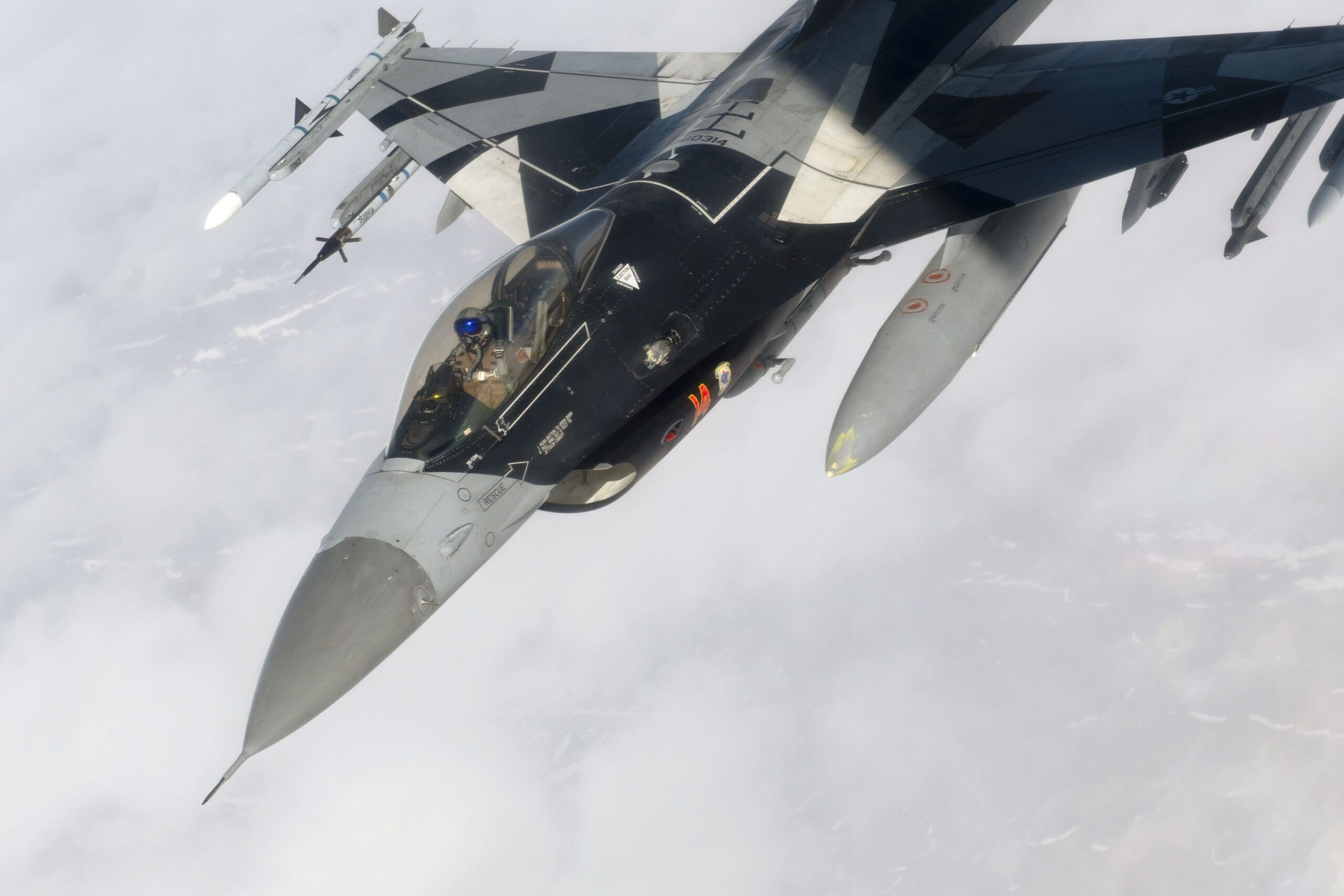
Secret Link