
International Bans on Huawei Increasing

International Bans on Huawei

International bans on Huawei technologies are increasing in the midst of rapidly changing world opinion.  The United States has long held that Huawei products are a threat to information security.  Now the United Kingdom and members of the European Union are voicing those concerns as well.  Because Huawei is a leader in emerging 5G technologies this is of great concern. 

Possible U.S. Ban on Huawei to Take Effect in August 2020

Legislation passed in 2019 is due to take effect August 13, 2020.  While congressional is considering amendments to the Prohibition on Contracting for Certain Telecommunications and Video Surveillance Services or Equipment, the core principles of the legislation are expected to remain intact.  The implementation of the rule will not likely be postponed according to a publication of the interim ruling, .  This rule will prohibit the awarding or renewing of federal contracts to contractors using telecommunication equipment produced by Huawei Technologies Company, ZTE Corporation, or any subsidiary or affiliate. 

Previous Huawei Rulings in the U.S.

The Bureau of Science and Industry (BIS) restricted Huawei’s semiconductor manufacturing capabilities in May of 2020.  BIS took this action to prevent the company from acquiring semiconductors that are the direct product of U.S. technologies and software.  These technologies now fall under the Export Authorization Regulations (EAR).  In other news, the Department of Justice is prosecuting a case against the company for participation in a fraudulent scheme to export banned U.S. goods and technologies for its business in Iran.

Global Reactions to China’s Continued Malicious Behaviors

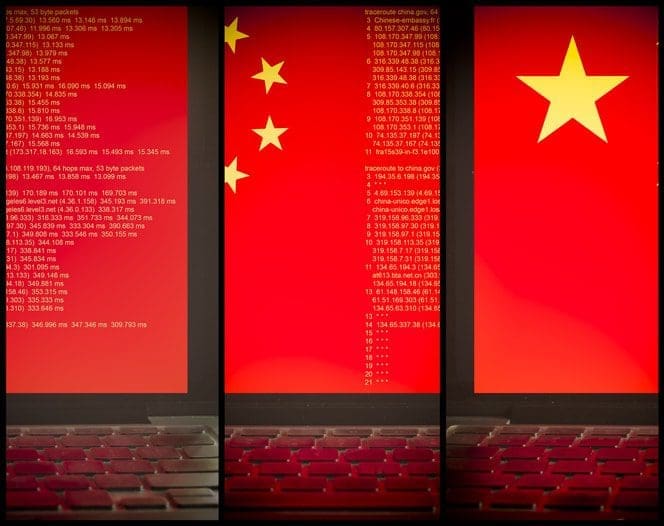
Because of a growing awareness of China’s history of cybercrime and information theft attitudes are changing in the international community .  The country’s handling of the Covid pandemic, the Hong Kong crackdown, and the repression of ethnic Uighurs have contributed to this awakening. 

There has been growing political pressure in recent months the United Kingdom  moved to remove Huawei devices from the country.  While France has stated that it will not totally ban the company’s 5G products, it is encouraging operators not to use them.  Australia, Canada, New Zealand, and Vietnam have declared that Huawei equipment poses a “significant security threat”.  Poland arrested a Huawei employee for spying.  Because of this, it has asked the EU to develop a joint stance against Huawei.

China has an extremely centralized government.  It is therefore impossible to separate the actions of the country with the actions of its corporations.  On July 13, 2020 Reuters reported that there was broad support in the European Union (EU) in response to new security laws in Hong Kong.

CVG Strategy

International bans on Huawei are but one development in a complex business world.  As a result, businesses will continue to be faced with a changes in regulations.  Additionally, cyberthreats to vital information are increasing in volume and complexity.  CVG Strategy is committed to helping businesses with export compliance and cybersecurity.    We are here to assist you establish Export Compliance Programs and Information Security Management Systems that will keep your business running strong.  Contact us to see how we can help.

CVG Strategy can help you understand revisions to the International Traffic in Arms Regulations (ITAR) and the Export Administration Regulations (EAR), and help you establish a coherent and effective export compliance program.   We can perform export control classifications, perform audits, assist in filings for export licenses and educate your team.  Regardless of whether your business falls under EAR or ITAR, CVG Strategy has the expertise to help.


Organizational Cyber Resiliency Report

Organizational Cyber Resiliency Report

IBM Security has released its organizational cyber resiliency report for 2020.  This year’s report, based on research from the Ponemon Institute is based on a survey of IT and cybersecurity experts from around the world.  The National Institute of Science and Technology (NIST) defines cyber resiliency as a merging of systems engineering, resilience engineering, and systems security.  Its goal is to develop systems with the ability to anticipate, withstand, recover from, and adapt to an increasingly hostile cyber environment.

Key Takeaways from the Cyber Resilient Organization Report

IBM’s organizational cyber resiliency report is an extremely detailed analysis of the current situation.  There are however, many key takeaways that can provide guidance for businesses attempting to critical cyber concerns.

Cybersecurity Incident Response Plans

Most organizations surveyed had suffered business disruptions during the last two years.  While it’s impossible to thwart every attack a well developed plan can greatly mitigate the effects.  Because the amount of cyber threats has markedly grown, many organizations have implemented Cybersecurity Incident Response Plans (CSIRP).  Effective CSIRPs involve all levels of an enterprises.  They include regular reporting to C suite stakeholders and incorporate regular reviews.  This is consistent with a well developed Information Security Management System (ISMS) such as ISO 27001 or NIST 800-171.

Automated Tools for Cybersecurity

Most participants reported that they had accomplished better resilience by employing automation tools.  Organizations that noted effectiveness used more than 20 tools when investigating or responding to a cybersecurity incidents.  While these tools can provide security, organizations that used too many tools (over 50) reduced their effectiveness.  These tools included technologies such as analytics, automation, AI, and machine learning.

Improved Cloud Service Implementation

More than two-thirds of companies in the United Kingdom, Germany, France, the United States and Canada sited value in the the use of cloud services.  These included organizations in healthcare, retail, and public sectors.  The leading reasons given for improvement due to cloud services were the benefits of leveraging a distributed environment, economies of scale, and availability of service level agreements.

It is important to note however, that poorly configured cloud services can severely endanger an organizations data security.  About a third of respondents reported negative results from investing in cloud services.

Sharing of Threat Intelligence

While a majority of participants agree that sharing intelligence with government and industry peers provides benefit, most do not share information.  Among reasons given were a lack of resources and cost.

CVG Strategy Cybersecurity Consulting

CVG Strategy cybersecurity consultants can help you tailor and implement effective CSIRPs that:

  • Incorporate all sectors of an enterprise.
  • Provide reporting to and participation of executives.
  • Identify top threats to your specific industry and assess risks.
  • Develop accelerated responses to specific attack types.
  • Optimize the implementation of automated technologies.
  • Incorporate regular reviews for evaluation and process improvements.

Contact Us today to see how our team of experts can bring their extensive experience to improve your cybersecurity processes on time and on budget.

Hong Kong Special Status Suspended by Commerce Dept.

Hong Kong Special Status

Commerce Department regulations that gave Hong Kong Special Status have been suspended.  U.S. Secretary of Commerce Wilbur Ross made this announcement on June 29, 2020.  This change will effect the export of sensitive U.S. technologies to Hong Kong.  It will also effect the availability for export license exceptions. Mr. Ross also mentioned that further actions to eliminate the differential treatment for Hong Kong are under considerations and urged the Chinese government to “fulfill the promises it has made to the people of Hong Kong and the world”.

Action a Response to Chinese Security Measures

The Chinese Communist Party has imposed severe security measures of late.  These actions are seen to undermine the autonomous status of Hong Kong.  As such, it will make it impossible to ensure that exports are not diverted to China’s People’s Liberation Army or Ministry of State Security.

Hong Kong has been a major international financial hub, but many experts see China’s recent actions endangering its future.   A new national security law imposed by China on June 28th will severely crack down on crimes of secession, subversion, terrorism, and collusion.  The law will allow for the creation of a national security agency in the city to take actions beyond existing Hong Kong law.

Hong Kong’s Special Status and the International Business Community

Members of the international business community have trusted Hong Kong as a major conduit for global finance and trade.  This was largely due to its autonomy from China’s authoritarian legal and economic systems.  With that firewall now effectively destroyed the future of Hong Kong’s trade legacy is in question.  The European Union (EU) has already stated its concerns about the conformity of the new law with Hong Kong’s Basic Law and with China’s international commitments.  The European Union considers it essential that the existing rights and freedoms of Hong Kong residents are fully protected.  How the rest of the world reacts to this crisis will very likely change the dynamics of trade in the region.  It will be important therefore, to continue monitoring this situation.

CVG Strategy Export Compliance Expertise

Export compliance is an extremely dynamic area of late.  Because of this, keeping up with changing laws and regulations can be challenging for businesses of all sizes.  CVG Strategy export compliance consultants can help.  We have extensive experience in Export Administration Regulations (EAR) and International Traffic in Arms Regulations (ITAR).  Our experts can help establish programs for compliance, conduct audits, and provide training.  We also provide quick on line answers for your ITAR questionsContact Us today to see how we can help.

Mobile Banking Apps Warning from the FBI

Mobile Banking Apps Warning

Mobile Banking Apps Warning

The FBI issued a mobile banking apps warning on June 10, 2020.  Many people are now switching over to mobile bank apps to limit visits to the bank during the Covid-19 pandemic.  The agency is concerned that this increased usage presents opportunities for exploitation from cyber actors.  The chief concern is that customers new to mobile banking may download fake or trojan apps.

Fake and Trojan Apps

Fake apps have become one of the fastest growing forms of cyber crime.  Fraudulent apps impersonate real apps to gather login credentials.  These apps show an error message after login and use permission requests to obtain and bypass security codes texted to users.

Trojan apps use codes concealed in apps unrelated to financial activities.  They can often be founds in games or tools that have been downloaded.  The malicious code will remain dormant until triggered by a legitimate banking app.  The trojan will then create a false version of the legitimate login page to collect credentials.  It then returns the user back to the authentic app so as to hide the data theft.

Important Tips for Protecting Your Information

Purchase Your App From a Reputable Source

The FBI encourages people to purchase apps from smartphone app stores or download them directly from a major U.S. bank website.  Smartphone app stores actively screen apps for malicious content. Additionally, most major US banks will provide a link to their mobile app on their website.  

Two Factor Identification

Most users of websites and applications do not enable two-factor identification.  Most people who don’t use this tool consider it an inconvenience.  Actually, two factor identification is easy to use and is very effective against cyber crime.  The FBI strongly recommends using two factor identification whenever possible.

Password Protocols

The FBI encourages people to engage in practices recommended by the National Institute of Standards and Technology (NIST).  These include:

Do:
  • Use passwords that contain upper case letters, lower case letters, and symbols.
  • Use a minimum of eight characters per password.
  • Create unique passwords for banking apps.
  • Use a password manager or password management service.
Don’t:
  • Use common passwords or phrases, such as “Password1!” or “123456.”
  • Reuse the same passwords for multiple accounts.
  • Store passwords in written form or in an insecure phone app like a notepad.
  • Give your password to anyone. Financial institutions will not ask you for this information over the phone or text message.

For more information concerning mobile device cybersecurity see the Cybersecurity & Infrastructure Security Agency’s (CISA) recommendations.

Challenging Times for Cybersecurity

An array of threats have entered our lives as new technologies emerge.  Cybersecurity is a challenge for individuals, businesses, and governmental agencies.  The banking industry is no different in addressing these vulnerabilities.  Recent breaches of Capitol One illustrate the massive dangers these vulnerabilities pose.  CVG Strategy is committed to helping businesses create and maintain viable Information Security Management Systems (ISMS).  Contact Us today to see how we can help you protect your vital data.


Effective Quality Management Documentation

Effective Quality Management Documentation
Policies and Procedure. Two binders on desk in the office. Business background.

Creating Effective Quality Management Documentation

Effective Quality Management Documentation is the backbone of a ISO 9001:2015 quality program.  The documentation created therefore should be clear, concise, and targeted for its intended audience.   Documents serve to explain and instruct all stakeholders on policies, procedures, and work instructions.  They also provide the basis for evaluation for continuous improvement and organizational development.

Documentation Requirements

Documentation requirements will vary in complexity and from organization to organization.  Factors that will determine this complexity include:

  • The size of the organization
  • Activities of the organization
  • Types of processes and products
  • Complexity of those processes
  • Level of competence of intended audience

Document requirements serve several purposes in the quality program.  High level documents are required for defining the scope, processes, policies, and objectives of the program.  Lower level documentation is required to define organizational responsibilities, procedures, work instructions, quality plans and other information.  Additional documentation is required for providing the results of quality processes.  These documents are required for demonstrating conformity.

Knowledge as a Basis for Documentation

Because we are all products of an educational system that rewards the perception of competency, it is easy to create obtuse documents.  Real knowledge of a given subject provides a basis for simple and clear documentation.  This will effectively convey expectations of performance and establish goal posts for review. 

Required knowledge includes an understanding of the upper level objectives of the quality program, the Context of the Organization, who the stake holders are, and what audience the document is intended for.

CVG Strategy Quality Experts Can Help

CVG Strategy provides Quality Management System (QMS) consulting services for ISO 9001:2015, AS9100, ISO 27001, and other standards.  We can help your organization establish and modify a QMS that can improve your business performance and save money.  We can provide training and auditing services.  CVG can also provide a complete documentation set, customized for your program requirements.

Contact Us today to see what our certified quality management experts can do for you.

Cyberspace Solarium Commission Report – Grim

Cyberspace Solarium Commission Report

Cyberspace Solarium Commission Report – March 2020

The Cyberspace Solarium Commission Report, released in March 2020, paints a grim picture of the level of cyber vulnerability in the United States.  It stresses the need for immediate action from both the public and private sectors to deter looming catastrophe.  The report focuses on strategic approaches to defend the United States against cyberattacks and the necessary policies and legislation to implement them.

A Layered Approach to Deterrence Recommended

To achieve a reduced probability of critical cyberattacks the report recommends three necessary layers of deterrence.  To achieve this deterrence the United States must:

  1. Work with allies and partners to promote responsible cyber behavior.
  2. Deny benefits to adversaries who exploit cyberspace by securing critical networks.
  3. Impose costs by maintaining a credible capacity and capability to retaliate against cyber actors.

This approach to deterrence should incorporate a “defend forward” concept to disrupt and defeat adversaries.  This would be accomplished by actively observing, persuing adversarial operations and imposing costs for those actions.  These costs as defined should be “short of armed conflict”.

Six Policy Pillars for Implementation

To implement an effective national cybersecurity strategy six pillars have been defined for implementation of the three layered approach.

Reform the U.S. Government’s Structure and Organization for Cyberspace

Proposed governmental reforms include rapid and comprehensive improvements at a all levels.  This would begin with an updated National Cyber Strategy from the executive branch.  Along with this, creation of cyber oversight committees in the House and Senate should be created.  A Senate-confirmed “National Cyber Director” is also advised.  Along with these actions, the strengthening of the Cybersecurity and Infrastructure Security Agency (CISA) is recommended.

Strengthen Norms and Non-military Tools

While there has been significant international norms established for responsible cyberspace behavior, little if any enforcement is taken against cyberthreat actors.  To mitigate this the report urges the Department of State to work with allies to employ law enforcement, information sharing, diplomacy, and sanctions, to support a “rules-based international order.

Promote National Resilience

A resilience to cyberthreats in both the public and private sector is required to deny adversaries a benefit from their actions and reduce confidence in actors from achieving their strategic ends.  This resilience could be addressed through:

  • Strengthening CISA.
  • Develop a planning mechanism in consultation with the private sector to develop contingent planning for significant cyber disruptions.
  • Codifying Cyber States of Distress tied to Response and Recovery Agencies and Funds.
  • Improvement of the Election Assistance Commission.
  • Governmental promotion of digital literacy through advancement of public awareness.

Reshape the Cyber Ecosystem Towards Greater Security

These efforts would include raising the baseline level of security by providing a National Cybersecurity Certification and Labeling Authority.  They would also involve creating laws making hardware, firmware, and software final goods assemblers liable for damages from known unpatched vulnerabilities.  Mention is also made for creation of national standardizing requirements for the collection, retention, and sharing of user data.

Operationalize Cybersecurity Collaboration with the Private Sector

Private sector entities must have primary responsibility for creating and maintaining viable Information Security Management Systems (ISMS), but the government can greatly assist these entities.  This could be accomplished by using government resources and intelligence capabilities to support businesses.

Preserve and Employ the Military Instrument of Power – and All Other Options to Deter Cyberattacks at Any Level

Efforts in this regard include comprehensive assessment of the Cyber Mission Force, a vulnerability assessment of weapon systems, and a sharing between governmental agencies and the Defense Industrial Base of potential threats.

CVG Strategy and Cybersecurity

CVG Strategy provides cybersecurity consulting and training for large and small organizations.  Our experts can tailor a program using risk management process to identify information assets and interested parties.   We can create the documentation and provide the essential training to establish your ISMS and guide you through certification audits.
 
CVG Strategy also provides consulting services for NIST 800-171 and CMMC Certification for those businesses and institutions providing services to the Department of Defense and other government agencies.

U S Restricts Huawei Semiconductor Technology Usage

U.S. Restricts Huawei's Semiconductor

The U S Restricts Huawei’s Semiconductor Manufacturing Capabilities

The U S will Restrict Huawei semiconductor manufacturing by limiting the use of technologies for design and manufacture.  This planned action was announced by the Bureau of Industry and Science (BIS) on May 15, 2020.  The BIS is implementing this action to protect national interests by preventing Huawei from acquiring semiconductors that are the direct product of certain U.S. software and technologies. 

Huawei on Entity List Since 2019

The Department of Commerce placed Huawei and its foreign affiliates on the Entity List in 2019.   The Entity List is a list of individuals or entities subject to specific export license requirements.  Since being placed on this list Huawei has skirted regulations by commissioning the production of semiconductors abroad.  Secretary of Commerce Wilbur Ross stated “This is not how a responsible global corporate citizen behaves.  We must amend our rules exploited by Huawei and HiSilicon and prevent U.S. technologies from enabling malign activities contrary to U.S. national security and foreign policy interests.”

EAR Rule Changes

The Export Administration Regulations (EAR) will make targeted changes to regulations to address the issue.  The following foreign-produced  items will now be subject to EAR export control:

  • Items, such as semiconductor designs, when produced by Huawei and its affiliates on the Entity List (e.g., HiSilicon), that are the direct product of certain U.S. Commerce Control List (CCL) software and technology.
  • Items, such as chipsets, when produced from the design specifications of Huawei or an affiliate on the Entity List (e.g., HiSilicon), that are the direct product of certain CCL semiconductor manufacturing equipment located outside the United States.  Such foreign-produced items will only require a license when there is knowledge that they are destined for reexport, export from abroad, or transfer (in-country) to Huawei or any of its affiliates on the Entity List.

Changes Urged by Lawmakers

The Department of Commerce’s actions come after lawmakers encouraged the Trump administration to make restrictions on the exports of emerging technologies.  Many have felt that the U.S. has been too passive in protecting U.S. interests in the worldwide semiconductor market.  Sen. Ben Sasse, R-Neb., applauded the rule, calling it “long overdue.” In a May 15 the senator was quoted as saying “Modern wars are fought with semiconductors, and we were letting Huawei use our American designs.”

China Reacts to Restrictions

In response to these restrictions, China’s Commerce Ministry is considering placing U.S. companies on its so-called unreliable entity list and stopping purchases of aircraft from Boeing.  China views these actions as a “serious threat” to its semiconductor industry.  These comments were made on May 17, 2020.

Om May 18, 2020, Huawei chairman Gou Ping said that U.S restrictions “ignore the concerns of many companies and industry associations.” Huawei also said the rule will “undermine” the global semiconductor industry. “The U.S. is leveraging its own technological strengths to crush companies outside its own borders,” the company said. “This will only serve to undermine the trust international companies place in U.S. technology and supply chains.”

Related Posts

https://cvgstrategy.com/bis-places-controls/

Cybersecurity Alert for Healthcare and Essential Services

cybersecurity alert for healthcare

Cybersecurity Alert Issued by United States and United Kingdom

A cybersecurity alert for healthcare and essential services was filed jointly by the United States and the United Kingdom.   The U.S. Cybersecurity and Infrastructure Security Agency (CISA) and the U.K. National Cyber Security Centre (NCSC) issued the alert on May 5, 2020.  These agencies have detected Advanced Persistent Attacks (APT) against organizations involved in Covid-19 responses.  Targeted entities include healthcare, pharmaceutical, academia, and research organizations.  Local governmental agencies are also being attacked.

System Vulnerabilities Being Exploited

CISA and NCSC have reported numerous incidents of APT actors scanning pharmaceutical and medical research organization external websites for vulnerabilities.  These actors are exploiting a Citrix vulnerability known as Citrix CVE-2019-19781.  They are also gaining access through vulnerabilities in Virtual Private Network (VPN) products from Pulse Secure, Fortinet, and Palo Alto.

Healthcare Organizations Subjected to Password Spraying

Healthcare organizations in a number of countries are being subjected to large-scale password spraying campaigns.  Password spraying is a brute force style of attack.  The cyber actor uses  tries a single and commonly used password against many accounts and then will attempt another. Because of the time between attempts at a single site rapid or frequent account lockouts are prevented.

Recommended Forms of Mitigation

In its cybersecurity alert for healthcare CISA recommends risk based holistic approaches to organizational cybersecurity consistent with the National Institute of Standards and Technology (NIST). 

CISA other recommendations for mitigation in this alert included:

  • Update VPNs, network infrastructure devices, and devices being used to remote into work environments with the latest software patches and configurations.
  • Use multi-factor authentication to reduce the impact of password compromises.
  • Protect the management interfaces of your critical operational systems.
  • Set up a security monitoring capability.
  • Review and refresh your incident management processes.
  • Use modern systems and software.

CVG Strategy

According to recent studies, organizations are unprepared to meet the challenges of modern cybersecurity.  CVG Strategy can help by implementing Information Security Management Systems (ISMS) that will protect your organization’s vital data and information systems.  Our Subject Matter Experts can guide your business through a variety of solutions including NIST 800-171.  Contact Us to learn more

FEMA Ruling on Medical Resources for Domestic Use

FEMA Ruling on Medical Resources

FEMA Temporary Ruling on Allocation of Personal Protective Equipment (PPE)

A Federal Emergency Management Agency FEMA ruling on medical resources will be effective until August 10, 2020. This action has been taken in response to the immediate need for Personal Protective Equipment (PPE) caused by the COVID-19 epidemic.  Recent studies have shown that COVID-19 is possibly transmitted through contact with respiratory droplets or contact with surfaces that have the virus on them.  Because the virus may be spread by people not showing symptoms the need for PPE is urgently required to protect health workers and people with underlying health conditions.

Action Taken in Response to Executive Orders

FEMA’s ruling is part of a response to a series of executive orders given by President Donald Trump.  These orders include:

Provisions of FEMA Ruling on Medical Resources

Banning of Exports

The ruling allocates that scarce or threatened materials shall not be exported without explicit approval of FEMA.  Because of this, any items covered under this ruling will be held by the U.S. Customs and Border Patrol (CBP) until FEMA determines to allow export or return for domestic usage.  In making these determinations FEMA will: consider:

  • Domestic requirements for the item,
  • Overall effect on the supply chain,
  • Any hoarding or price gouging circumstances,
  • Quantity and quality of items,
  • Humanitarian considerations,
  • International considerations.

Exception for Continuous Export Agreements

FEMA will not purchase these items from shipments made by or on behalf of U.S. manufacturers with continuous export agreements with foreign customers.  This would pertain to orders in effect since at least January 1, 2020, so long as at least 80 percent of such manufacturer’s domestic production of covered materials, on a per item basis, was distributed in the United States in the preceding 12 months.

Investigations and Requests for Information

FEMA has been empowered to undertake investigations and issue requests for information to enforce these rulings.  Failure to comply fully with these ruling may result in a fine of not more than $10,000 or imprisonment for not more than one year, or both. 

Documentation of Changes

Due to the nature of the ongoing situation FEMA may also determine that additional items will fall under these rules.  This may occur if the item is crucial to national defense requirements and will not cause significant disruption to the domestic markets.  As required by the Administrative Procedure Act (APA), FEMA must publish notice of any changes in requirements on the Federal Register.  Therefore persons or parties with interest in these changes will then be able to submit data, views or arguments prior to final execution.

CVG Strategy

CVG Strategy is committed to helping businesses maintain compliance to U.S. export laws.  We have decades of experience and expertise in Export Administration Regulations (EAR) and International Traffic in Arms Regulations (ITAR).  Contact Us to see how our experts can help.

Apple Email App Vulnerabilities in iPhone and iPad

apple email app vulnerabilities

Apple Email App Vulnerabilities Found in Over Half a Billion Devices

Apple Email App Vulnerabilities in iPhone and iPad were reported by ZecOps, a mobile security forensics company on April 20, 2020.  These vulnerabilities have existed since the release of iPhone 5 in September of 2012.  The vulnerabilities allows attackers to remotely infect a device by sending emails.    Attacks inserted into emails can allow remote code execution by consuming device memory resources.

ZecOps also reported that attackers may have used these vulnerabilities against a Fortune 500 organization, “an executive from a carrier in Japan” and “a journalist in Europe”.  It concluded that these attacks were conducted by “an advanced threat operator”.

Apple Debates Exploitation of Flaws

Although Apple has acknowledged the vulnerabilities, it has countered claims that that these flaws were exploited.  An Apple representative was quoted by Reuters as stating  that “these issues do not pose and immediate risk to our users”.  A patch is planned to be released to remedy the issues.  A beta update has already been released.

Possible Interim Security Measures

It can be surmised that if attacks are occurring that they will increase in frequency until patches are released.  Therefore, it may be advisable to access emails on effected devices until the required updates are available.  This news is unfortunately developing at a time when larger numbers of people are working remotely and are accessing business emails in a potentially unsafe manner.   

Apple mobile devices have generally had a good reputation for security and are used by many businesses.  There have however, been previous flaws that have exposed user data.  Because no platform is free from such flaws business IT departments should carefully select email apps and protocols to protect vital data.

CVG Strategy

Studies have shown that a majority of businesses have not achieved a sufficient cybersecurity maturity level.  This is especially distressing considering that the level of cyber attacks are growing and that businesses are primary targets.  CVG Strategy is committed to helping businesses secure their vital data.  We can assist businesses in establishing effective Information Security Management Systems (ISMS) through the implementation of ISO 27001.  Contact us with your questions.

North Korean Cyber Threat Guidance

North Korean Cyber Threat
Photo by Markus Spiske

U.S. Government Provides Guidance on North Korean Cyber Threat

Guidance was provided on the North Korean cyber threat by the U.S. Departments of State, the Treasury, Homeland Security, and the Federal Bureau of Investigation on April 15, 2020.  North Korea, formally known as the Democratic People’s Republic of Korea (DPRK) continues to pose a significant threat to the international financial system through an increase in malicious cyber activities.  Many of these cybercrimes are being utilized to generate funding for DPRK development of weapons of mass destruction and ballistic missile programs.  Of special concern is DPRK’s increased ability to to conduct destructive activities on critical infrastructure.

Financial Theft and Money Laundering

In its 2019 mid-term report the UN Security Council 1718 Committee Panel of Experts (POE) found that the DPRK was using increasingly sophisticated cyber techniques to attempt in the theft and laundering of as much as $2 billion dollars in that year.  These findings are consistent with U.S. Department of Justice allegations released in March of 2020.  These activities were targeted at digital currency exchanges.

Other DPRK Cyber Crimes

The DPRK has conducted a number of extortion campaigns.  In some instances, DPRK cyber actors have demanded payment from victims under the guise of long-term paid consulting arrangements in order to ensure that no such future malicious cyber activity takes place.  These cyber actors have also been hired guns in the hacking of websites for extortion purposes.

Cryptojacking has been an activity engaged in by the DPRK.  This is accomplished by compromising a computer and steal its computing resources to mine digital currency.  The POE reported several instances in which infected computers mined assets and transferred digital currency to servers at the Kim Il Sung University in Pyongyang.

The DPRK Rap Sheet

The DPRK has had a long dark history of cyber crime.  The list below includes some of the more notable operations:

  • Sony Pictures cyber attack in November 2014 in retaliation for the film “The Interview”.
  • Bangladesh Bank Heist in February of 2016 where the DPRK allegedly stole $81 million.
  • WannaCry 2.0 ransomware that infected computers in hospitals, businesses, schools, and homes in over 150 countries in 2017
  • FASTCash Campaign which has targeted ATMs in Asia and Africa since 2016.
  • Digitial Currency Exchange Hack in April of 2018 where the DPRK stole nearly $250 million through digital currency transactions.

Countering the Threat

In its report the U.S. Government agencies have listed numerous measures to counter the DPRK threat include raising the awareness of the gravity and scope of the problem.  The single most important thing that must be accomplished however, is the adoption and promotion of cybersecurity best practices.  As mentioned in a previous post businesses around the world including the United States have not attained appropriate levels of cyber strategy and execution.  In a survey of businesses undertaken by the insurance provider Hiscox in 2019, 74% fell into the Novice classification for cybersecurity.

CVG Strategy

CVG Strategy knows the importance of effective cybersecurity and is committed to helping businesses create effective Information Security Management Systems (ISMS) to protect their sensitive information and vital assets.  Contact us to see how we can help you.

Effective Quality Management Systems Implementation

Effective Quality Management Systems

Creating Effective Quality Management Systems.

Effective Quality Management Systems (QMS) are the products of proper implementation.  For ISO 9001:2015, that implementation is dependent on a detailed assessment of what processes are required for by the context of the organization.  That assessment can also provide guidance for requirements of  the management team that needs to be assembled.

Is There a Requirement for a Quality Manager Representative?

ISO 9001:2015 does not have a requirement for a Quality Manager Representative but consideration should be given to creating this position in you organization.  When examining the requirements for leadership as described in ISO 9001:2015 it may well serve an organization to centralize the responsibilities of program coordination.  This may be particularly important when a large number of specialized processes are required, each with its own owner.  The important question to be answered is are all of the requirements of section 5.3 being adequately performed and coordinated?

Section 5.3

  • Top management shall ensure that the responsibilities and authorities for relevant roles are assigned, communicated and understood within the organization.
  • Top management shall assign the responsibility and authority for:
    a) ensuring that the quality management system conforms to the requirements of this International Standard;
    b) ensuring that the processes are delivering their intended outputs;
    c) reporting on the performance of the quality management system and on opportunities for improvement (see 10.1), in particular to top management;
    d) ensuring the promotion of customer focus throughout the organization;
    e) ensuring that the integrity of the quality management system is maintained when changes to the quality management system are planned and implemented.

Context of the Organization

If an organization has sufficient complexity, a great deal can be accomplished by having a dedicated Quality Manager Representative that can oversee a these tasks.  Because of the broad nature of these task the ideal representative may not be a member of the quality department.  In fact having an independent advocate for customer input can be very important.  Additionally input from product development teams is equally important.

Getting Perspective in Creating a Quality Management System

It can often be difficult for managers to assess the structure of a QMS.  This is because they can be caught up in the immediate requirements of the workplace.  It is therefore important to engage a third party with expertise to help with this essential analysis.  CVG Strategy experts in ISO 9001 can help you on the path to defining required processes and recommending management structures that are appropriate for your business.  Our team has been helping businesses develop Effective Quality Management Systems in a wide array of industries.  Contact Us today to see how we can help.

Concerns for Business Cybersecurity Capabilities

Concerns for Business Cybersecurity

Business Cybersecurity Report Card for 2019

There are growing concerns for business cybersecurity to meet the challenges of today’s hostile environment.  The international insurance underwriter Hiscox recently released its Hiscox Cyber Readiness Report 2019 and the news was not good.  The report showed that the number of cyber attacks has increased and that businesses of all sizes are being targeted.  While cybersecurity spending has increased fewer companies have attained appropriate levels of cyber strategy and execution.  The report included findings from companies located in Belgium, France, Germany, The Netherlands, Spain, United Kingdom, and the United States.

Trends in Cyber Attacks

Increases in the number of organizations reporting incidents of cyber attacks have occurred over the past year.  While larger businesses are more likely to experience these attacks, large increases in rates among medium and small size firms have occurred.  Reported losses from these attacks have increased by over dramatically, but the true value of damage done from loss or compromise of sensitive data is impossible to truly assess.  While cybersecurity spending has increased by as much as 24%, the number of firms rated as having adequate cyber strategy and execution has fallen.

Particular Concerns for Business Cybersecurity

Supply Chain Vulnerabilities

Large numbers of companies reported incidents involving their supply chain in the last year.  A majority of these organizations now recognize these vulnerabilities and are including cyber Key Point Indicators (KPI) in their contracts with suppliers.  Other efforts included increased audit and evaluation of their supply chain.

Cloud Vulnerabilities

There was a marked increase in cloud vulnerabilities in the last year with 22% of respondents reporting outages from third-party cloud providers.  This is a 9% increase from the previous year.  This increase is likely due to more firms using cloud based solutions for sensitive data.

Costs of Losses

The mean losses from cyber attacks to businesses has risen as much as 61% in the last year.  These losses were seen in all businesses regardless of size or sector.  The greatest increases were seen in large businesses with between 250 and 999 employees.

Cyber Maturity

Overall progress in attaining effective cybersecurity programs has stalled out even though increases in cybersecurity spending have occurred.  Of those who participated in the survey, 74% fell in to the Novice classification.  This assessment included strategy, oversight, resourcing, technology, and processes.  Of special concern, the United States ranked among the lowest in this category.

Some Take Aways

Businesses are beginning to take notice and are becoming less complacent.  Many are being prompted by increased regulation from governments and those companies they supply goods and services to.  Cybersecurity is an interdependent undertaking.  For an fully effective program an Information Security Management System (ISMS) should be employed.  A good example is ISO/IEC 27001.  It employs a comprehensive that includes processes, people, and IT systems to maintain data security.  Because it uses a constant improvement model, it can remain adaptable to changing threats through a risk management approach.

CVG Strategy

CVG Strategy shares your concerns for business cybersecurity.  We are committed to helping businesses secure their vital data.  CVG Strategy can establish ISO 27001 and NIST 8001-171 programs that incorporate security architecture, detective controls, and preventative controls.  We provide training so that a cooperative and coordinated effort can be made by all involved.  We are also committed to helping those who provide serviced and goods the the U.S. Department of Defense in achieving requirements for Cybersecurity Maturity Model Certification (CMMC).  Contact Us to see how we can help.

Huawei’s Legal Problems Continue in the United States

huawei's legal problems
huaweis legal problems

Huawei’s Legal Problems in the United States

Huawei’s Legal Problems in the United States continue on multiple fronts.  The Chinese tech giant has been the target of the U.S. Senate, The Department of Justice, and has had a case against U.S. Government contracts ban dismissed before going to court.

Department of Justice Actions

In an ongoing indictment the U.S alleges that Huawei participated in a fraudulent scheme to export banned U.S. goods and technologies for its business in Iran.  Although Huawei has denied these allegations, Reuters has reported that recently released company records show that the company was directly involved in these actions.  This could lead to Huawei’s chief financial officer, Meng Wanzhou’s extradition from Canada where she is being held on bank fraud and other allegations.

US Senate Actions

The U.S. Senate approved a bill that would replace Huawei Technology Co. telecom equipment in rural areas.  The bill would provide $ 1 billion in funding for approximately 40 rural carriers to replace equipment that could be used by the Chinese government to spy on communications routed through their equipment.  The bill will now move on to President Trump who will likely sign it into law.  Telecommunications Industry Association chief executive David Stehlin commented that the legislation was “a critical step in securing our network and ensuring the integrity of the telecommunications supply chain as we usher in the 5G era.” 

Case Dismissed

A lawsuit that challenged a U.S. law barring the government from using Huawei equipment, was dismissed in a federal court in Texas before going to trial.  This ban further underlines the U.S. governments security concerns of using the company’s products.  These concern has been very strong among lawmakers in both parties in light of continued cyberattacks and intellectual property theft by agents of the Chinese government. 

What This Means for U.S. Businesses

Businesses will have to exercise increased vigilance regarding the security of intellectual properties and technologies.  This will involve developing and improving processes involving export compliance and cyber securityCVG Strategy has the expertise to help businesses of all sizes meet these challenges.  Contact Us today to see how we can help.


NSO Group Under Investigation by the FBI

NSO Group Under Investigation

The FBI is Investigating NSO Group for Personal and Government Hacks

The Israeli based NSO Group is under investigation concerning possible attacks on United States citizens and companies by the FBI.   Reuters reported on January 30, 2020 that the probe, which has been active since 2017, concerns the infection of smartphones.  NSO Group creates products for government intelligence and law enforcement agencies for use against crime and terror.  A spokesperson for the NSO Group stated “We have not been contacted by any U.S. law enforcement at all about any such matters,” and the FBI will neither confirm or deny the existence of any investigations.

Pegasus Product of Special Concern

The NSO Group‘s Pegasus product is a software tool that can capture data on a phone including encrypted messages and audio.  Allegations have been raised that Pegasus might have been used in a hack against Amazon’s Jeff Bezos.  The FBI has met with Bezos and has reported that if US citizens are being hacked that it considered both the company supplying the software and the criminals using those tools responsible.  In a quote an FBI official said “Whether you do that as a company or you do that as an individual, it’s an illegal activity”.

Where to Draw the Line

As with any tool, the ultimate benefit or harm in its use lays in the hands of the person or agency employing it.  While few would argue that fighting crime and terror are not noble goals, care must be taken in providing those tools to appropriate people or agencies.  Furthermore continued oversight by those agencies empowered by such tools must be maintained to make sure rogue individuals within an organization do not use them maliciously.   Perhaps of greater concern is that once the technologies are obtained by nefarious players there is no way to reestablish control of them, placing all of us at risk.

Smartphone Cyber Vulnerabilities for Businesses

Smartphones are of special concern to businesses because of the ability of users to inadvertently place proprietary data at risk.  The costs of such data breaches is difficult to ascertain because of the shared risk with suppliers, vendors, and customers.  Adequate mitigation requires a flexible strategic program that can adapt to threats as they evolve.  This is best provided by an Information Security Management System (ISMS).  An ISMS is a management system based on risk assessment to establish, implement, operate, monitor, maintain and improve information security.  CVG Strategy can help you achieve ISMS Certification.   Contact us to learn more.

New Geospatial Software Export Restrictions to the EAR

Geospatial Software Export Restrictions

New EAR Export Restrictions of Geospatial Software

The Bureau of Industry and Science placed restriction on the export of geospatial software on January 6, 2020.  This ruling classifies software specially designed to automate the analysis of geospatial imagery, as specified, under the Export Control Classification Number (ECCN) 0Y521 series, specifically under ECCN 0D521.  This ruling which effects exports to all countries except Canada, was determined to be necessary because these items could provide significant military or intelligence advantage to the United States.

What is Geospatial Software?

Geospatial software is a growing field of technology involved with mapping and analysis of the Earth’s surface.  It is a technology used to acquire, manipulate, and store geographic information.  Technologies that utilize geospatial software include Global Positioning Systems (GPS), Geographic Information Systems (GIS), and Internet Mapping.   As an analysis tool it can be used by businesses to understand trends at specific locations by understanding demographics, availability of natural resources, agricultural trends, and environmental conditions.

Because such powerful tools can also be used for a wide variety of intelligence gathering activities by unfriendly nations the new export restrictions were expected.  They will, however, place limitations on a large number of commercial, proprietary, and open source developers of software.  Included on the list of players are some rather large companies like Microsoft and Autodesk.  It will be necessary for these companies to place serious controls over the distribution of their products to prevent non-compliance.

The Need to Stay Aware

As technology develops into new market segments controls on the export of these items must be clarified.  EAR and International Trade in Arms Regulations (ITAR) are therefore a very dynamic.  For companies that are involved in export, keeping in step with these new regulations can be a challenge.  Maintaining an effective export control program for either commercial or military markets requires constant vigilance and education.  CVG Strategy can help with Export Classification, ITAR Training, and Anti-Boycott Regulations. 

Our consultants are premier providers of customized ITAR Consulting and ITAR & Export Compliance Programs and Training that addresses critical U.S. Government regulations, from Export Administration Regulations (EAR), to the International Traffic in Arms Regulations (ITAR) and Office of Foreign Asset Controls (OFAC) and other regulatory agencies and more.


Secret Link