


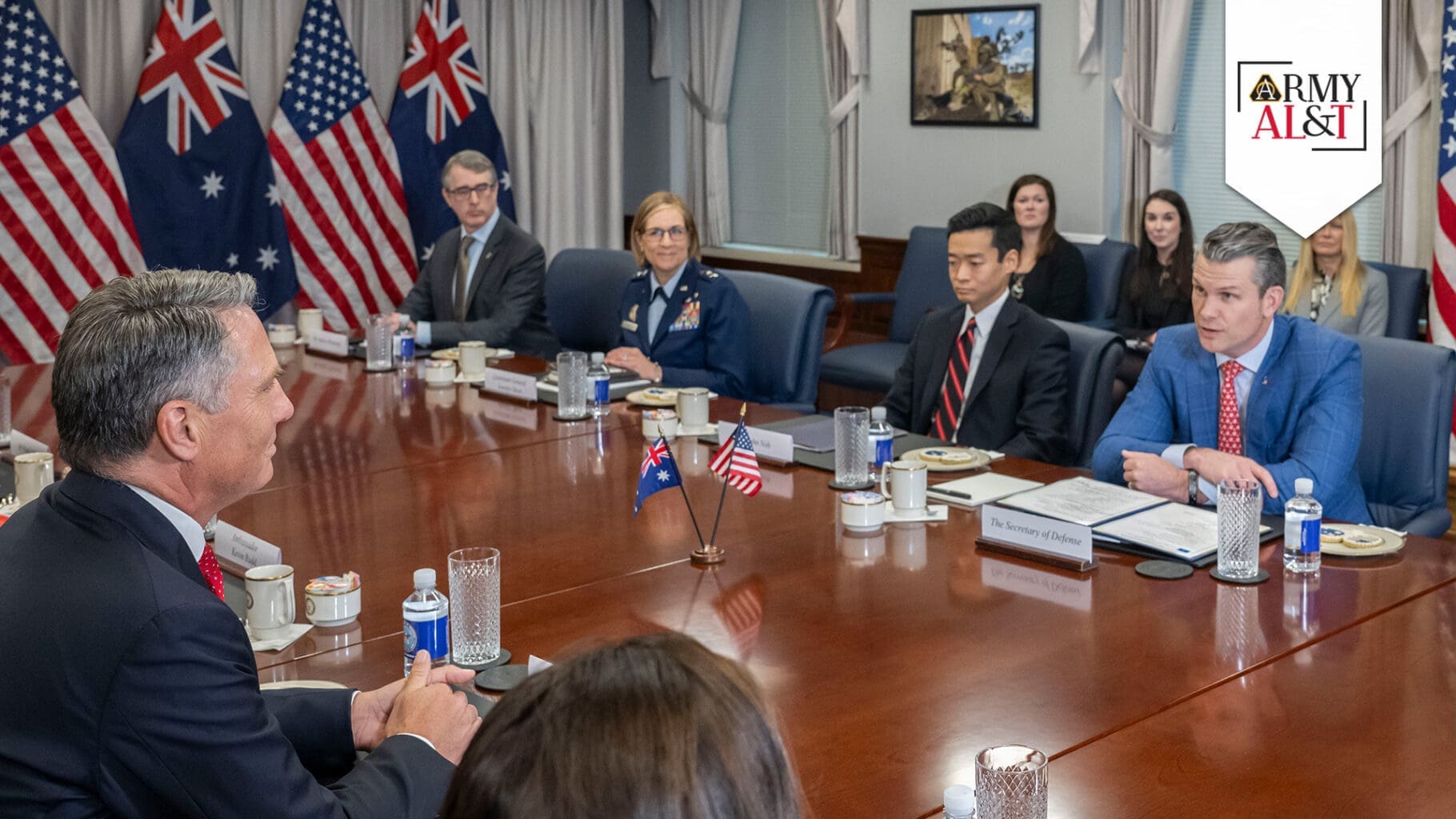
The Directorate of Defense Trade Controls (DDTC), under the Department of State, has released the AUKUS Final Rule. This amendment, under part 126 of the International Traffic in Arms Regulations (ITAR) was published and became effective on December 30, 2025. This exemption will greatly facilitate defense trade between defense trade between the United States, the United Kingdom, and Australia.
AUKUS Final Rule Evolution
AUKUS was initiated as a strategic initiative to enhance the defense capabilities of all three nations. It was created in response to national security threats posed by the Peoples Republic of China (PRC) and Russia. Its initial priority, under Pillar 1, was to facilitate the Royal Australian Navy’s acquisition of nuclear-powered submarines.
AUKUS Pillar 2 was later initiated to develop advanced military capabilities between the three nations. Its focus includes artificial intelligence, quantum technologies, and undersea capabilities. Pillar 2 is considered a crucial element in maintaining a competitive edge in the Indo-Pacific region. Future developments in this effort may include Japan and South Korea.
Pillar 1 went through a temporary halt as the program underwent a Pentagon review to address capability concerns. It was felt that the agreement would leave the U.S. with insufficient submarine assets. These concerns were mitigated when the U.K. agreed to increase its shipbuilding and service industries.
Participating in AUKUS Pillar 2
The AUKUS defense trade and cooperation exemption applies to specific articles and defense services, and dual-use items. It allows the export, reexport, retransfer or temporary import to designated countries without individual licenses. Items not allowed under this exemption can be found under the Excluded Technology List. Organizations in participating countries desiring to participate in the program must be registered Authorized Users.
AUKUS Revisions Affecting the EAR
The Bureau of Industry and Security (BIS) had published an interim final rule in April 2024 to remove license requirements for exports, reexports, and in-country transfers between the three countries. In May 2024 the BIS made corrections to that publication to footnote 9. This change, while easing licensing and end use requirements for most items would leave in place license requirements for firearms-related items and other CC controlled items.
These items include ECCNs 0A501 (except 0A501.y), 0A502, 0A503, 0A504, 0A505.a, .b, and .x, 0A981, 0A982, 0A983, 0D501, 0D505, 0E501, 0E502, 0E504, 0E505, and 0E982.
CVG Strategy Export Compliance Management Programs
The AUKUS final rule illustrates the everchanging risks and opportunities for organizations involved in the export of ITAR regulated products. Remaining informed and having an effective export compliance program is essential for maintain a competitive edge.
Export Compliance Management Programs establish clearly defined policies and procedures for all departments within an organization. They ensure that essential processes are performed to prevent violations. They also ensure that training, auditing, and record keeping are maintained according to requirements.
CVG Strategy can help you understand export regulations, and help you establish a coherent and effective export compliance program. We can perform export control classifications, perform audits, assist in filings for export licenses and educate your team. Regardless of whether your business falls under EAR or ITAR, CVG Strategy has the expertise to help.